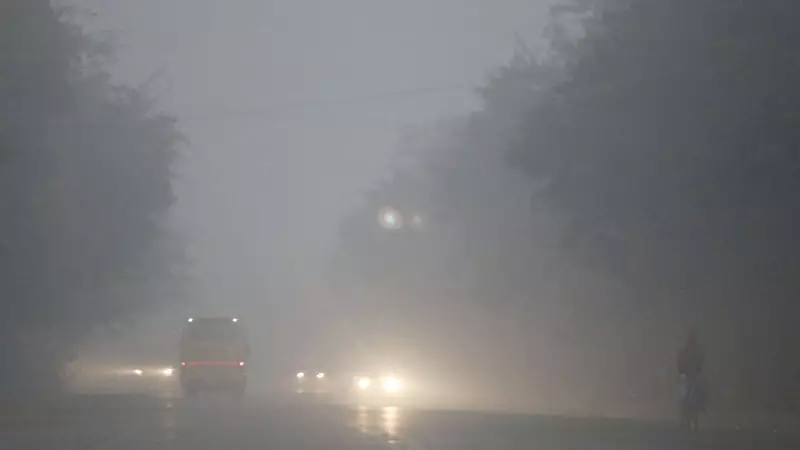
Delhi and the National Capital Region (NCR) faced severe travel disruption and reduced visibility on Monday morning as a thick blanket of 'very dense' fog engulfed the area. The conditions were particularly critical at the Indira Gandhi International (IGI) Airport, where visibility plummeted to a mere 50 metres, severely impacting flight operations.
Airport Chaos and Passenger Advisory
In response to the dangerously low visibility, authorities at Delhi Airport were forced to implement Category-III (CAT-III) landing conditions. This special protocol is activated during intense fog and allows only aircraft and pilots equipped with advanced instrument landing systems to operate. The airport issued an advisory for passengers, urging them to contact their respective airlines for real-time flight information before heading to the terminal.
IMD's Hour-by-Hour Visibility Forecast
The Indian Meteorological Department (IMD) provided a detailed forecast, indicating a slow but steady improvement throughout the day. According to their update, visibility around IGI Airport was expected to improve to approximately 100 metres in dense fog conditions by 8:30 am IST. A further improvement to about 400 metres in moderate fog was anticipated from 9:30 am IST.

The relief was projected to continue, with visibility reaching nearly 800 metres in shallow fog by 12 noon. The IMD forecasted that normalcy would return from 1:30 pm onwards, with visibility likely to rise above the 1,000-metre mark.
Broader North India Weather Impact
The fog and cold wave were not confined to Delhi-NCR alone. Other parts of North India, including Chandigarh and Dehradun, also grappled with a prevailing cold wave, compounding the discomfort caused by the low visibility. The widespread nature of the weather phenomenon highlights a typical winter pattern for the region, though Monday's intensity caused significant operational challenges, especially for air and road travel.
The combination of dense fog and cold conditions serves as a stark reminder for residents and travellers to stay updated with official weather bulletins and transport advisories during the winter season to plan their movements accordingly.