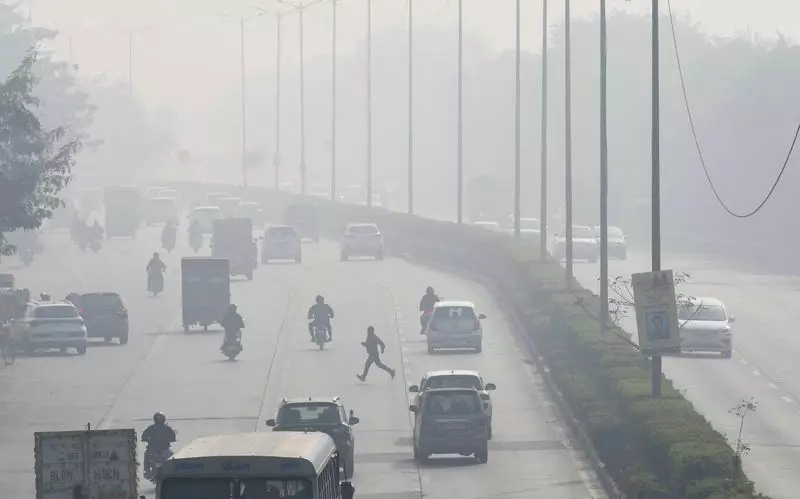
Delhi's battle with toxic air has taken a turn for the worse once again. The national capital's air quality index (AQI) has sharply deteriorated, slipping back into the 'Very Poor' category. This alarming decline marks a significant reversal after a brief period of marginal improvement earlier in the week.
Sharp Deterioration in Air Quality Metrics
The latest data from the Central Pollution Control Board (CPCB) paints a grim picture. On Friday, the city's average AQI was recorded at a concerning 385. This reading falls squarely within the 'Very Poor' band, which ranges from 301 to 400 on the national index. The sudden spike follows a period where the AQI had shown some signs of relief, hovering around 300 earlier in the week.
Meteorological conditions are being held primarily responsible for this rapid accumulation of pollutants. Officials from the India Meteorological Department (IMD) and pollution control authorities have pointed to calm wind conditions and low temperatures. These factors have effectively trapped pollutants close to the ground, preventing their dispersion and leading to a dense, harmful smog blanket over the city.

Authorities Pinpoint Causes and Forecast
The System of Air Quality and Weather Forecasting and Research (SAFAR), which operates under the Union Ministry of Earth Sciences, provided a detailed analysis. Their scientists confirmed that the primary reason for the degraded air is the near-stagnant local winds. With minimal wind movement, particulate matter and other emissions from vehicles, industry, and other sources are not being blown away.
Furthermore, SAFAR's forecast offers little hope for immediate recovery. The agency has predicted that the air quality is likely to remain in the 'Very Poor' category for the next few days. They have also indicated that the situation could potentially worsen, with AQI values possibly climbing higher if the unfavorable meteorological conditions persist.
Health Implications and Public Advisory
An AQI level of 385 carries serious public health implications. The 'Very Poor' category, as defined by government agencies, comes with a clear health warning. It states that prolonged exposure to such air can lead to respiratory illness even in healthy individuals. For those with pre-existing lung or heart conditions, the risks are significantly amplified.
Health experts and authorities typically advise the following precautions when the AQI enters this range:
- Avoid prolonged or heavy outdoor exertion, especially for children, the elderly, and those with health conditions.
- Consider using N95 or N99 masks when venturing outside.
- Keep doors and windows closed to prevent polluted outdoor air from entering homes and offices.
- Use air purifiers indoors where possible.
The recurring 'Very Poor' air quality episodes highlight the persistent and severe nature of Delhi's winter pollution crisis. While emergency measures like the Graded Response Action Plan (GRAP) are in effect, the latest data underscores the challenge of combating pollution when natural weather conditions turn adverse. Citizens are urged to stay updated on official advisories and take necessary precautions to safeguard their health.