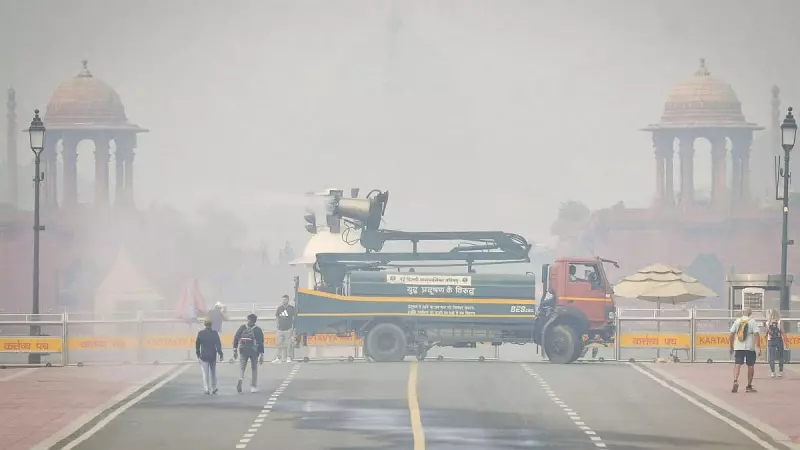
A recent analysis has delivered a sobering update on the air quality crisis in India's capital. According to a report released by the Centre for Research on Energy and Clean Air (CREA) on Saturday, pollution levels in Delhi nearly doubled during the month of November 2025 compared to preceding periods, maintaining a severe category.
Key Findings from the CREA Analysis
The report, made public on December 6, 2025, presents a complex picture. It highlights a significant and positive development: the contribution of stubble burning from neighboring states to Delhi's toxic air was markedly lower this year compared to November 2024. This suggests that policies and efforts aimed at curbing agricultural residue burning may be yielding some results.
However, this silver lining is overshadowed by the grim overall data. Despite the reduced impact of farm fires, the concentration of hazardous particulate matter (PM2.5 and PM10) in Delhi's atmosphere saw a sharp increase. The findings indicate that other persistent sources of pollution overwhelmed any gains made from managing stubble burning.

Persistent Sources Behind the Severe Smog
So, what caused the severe pollution spike if stubble burning was less of a factor? The CREA report implies that the usual, year-round culprits continue to choke the city. Experts point to a combination of local vehicle emissions, industrial pollution, dust from construction sites, and the burning of waste and biomass within the city.
Meteorological conditions typical for November, such as low wind speeds and cooler temperatures that trap pollutants close to the ground, also played a critical role in amplifying the problem. This created a toxic cocktail that led to the near-doubling of pollution metrics throughout the month.
Implications and the Path Forward
The report's conclusions are clear: while tackling stubble burning is necessary, it is insufficient on its own. Delhi and the broader National Capital Region require a comprehensive, multi-pronged strategy that addresses all major pollution sources simultaneously and throughout the year.
The sustained severe air quality has dire consequences for public health, leading to a rise in respiratory illnesses, cardiovascular problems, and long-term health risks for millions of residents. The CREA data serves as a crucial reminder that the fight for clean air demands consistent and aggressive action across all sectors, not just seasonal interventions.