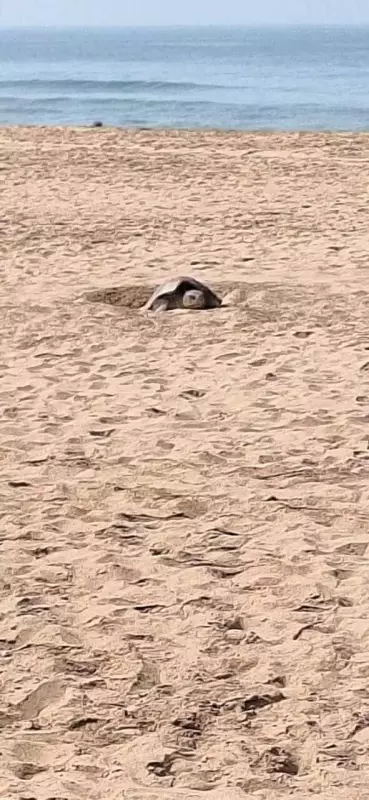
Rare Daytime Olive Ridley Turtle Nesting on Agonda Beach Interrupted by Tourists
In an unusual event that captivated onlookers, an olive ridley turtle made a rare daytime appearance on Agonda beach in Canacona, Goa, around 10:30 AM on Tuesday. The marine creature began scooping sand to lay its eggs, a sight typically reserved for after sunset, drawing immediate attention from beachgoers.
Tourist Intrusion Halts Nesting Process
As tourists gathered to watch the turtle in action, their close proximity caused the animal to stop its nesting activity. This disruption highlights the challenges faced by wildlife during peak tourist seasons in coastal areas. The turtle, visibly affected by the crowd, paused its natural process, putting the successful laying of eggs at risk.
Forest Department Intervention Ensures Protection
At this critical moment, a lone forest rescuer on day duty was alerted and rushed to the site. The rescuer faced significant difficulty in managing the crowd, initially struggling to pull tourists and onlookers away from the nesting site. He had to call for backup, and only after additional forest staff arrived did the crowd disperse, allowing the turtle to resume its activity.

Once the area was secured, the olive ridley turtle successfully laid its eggs before retreating back to the sea. This incident underscores the importance of maintaining a safe distance from wildlife to ensure their natural behaviors are not disturbed.
Official Statement and Conservation Efforts
South marine range forest officer, Rajesh Naik, explained that they typically have only one rescuer posted during the day, as olive ridley turtles usually arrive after sunset to lay eggs. This daytime nesting was an exceptional occurrence, making it the 15th turtle nesting of the season that has been protected by forest staff for incubation at the Agonda hatchery.
Naik emphasized the ongoing efforts to safeguard these endangered species, noting that the forest department's prompt action ensured the eggs were collected and transferred to the hatchery for safe incubation. This proactive measure is part of broader conservation initiatives aimed at boosting the olive ridley population along Goa's coastline.
Broader Implications for Wildlife Tourism
The event raises important questions about responsible tourism and wildlife protection. Key points include:
- The need for increased awareness among tourists about maintaining distance from nesting turtles.
- The potential for expanding forest staff presence during peak tourist hours to prevent similar disruptions.
- The success of hatchery programs in supporting turtle conservation despite human interference.
This incident serves as a reminder of the delicate balance between tourism and wildlife conservation in ecologically sensitive areas like Agonda beach.