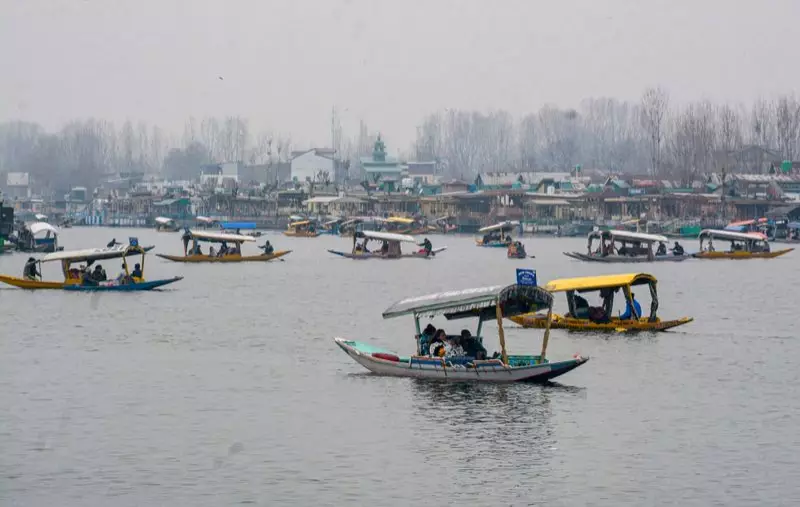
A severe cold wave has tightened its grip over northern India, bringing picturesque yet biting conditions to Jammu and Kashmir and sending temperatures plummeting across the plains. The iconic Dal Lake in Srinagar witnessed a rare spectacle as its fringes froze over, while the national capital and several towns in Uttar Pradesh recorded near-freezing minimum temperatures.
Kashmir's Icy Grip and the Frozen Fringes of Dal Lake
In the Kashmir Valley, the intense cold has led to a partial freezing of the famous Dal Lake. The shallow waters along the edges of the lake solidified into ice, creating a stark winter scene. This phenomenon, while visually striking, signals the severity of the ongoing cold spell in the region. The minimum temperature in Srinagar settled at a frigid -4.3 degrees Celsius on Tuesday, January 9. Other parts of the valley experienced even harsher conditions, with the ski-resort town of Gulmarg recording a bone-chilling low of -5.0 degrees Celsius.
The cold has been exacerbated by a persistent cloud cover that has trapped the chill near the surface. The India Meteorological Department (IMD) has forecast generally cloudy skies with the possibility of very light snow or rain at isolated higher reaches over the next 24 hours, which could maintain the low temperatures.

Delhi and Uttar Pradesh Shiver as Mercury Plunges
The cold wave has extended its reach far beyond the mountains, severely impacting the plains of North India. In Delhi, residents woke up to one of the coldest mornings of the season. The Safdarjung Observatory, which provides the official reading for the city, recorded a minimum temperature of 3.4 degrees Celsius, which is five degrees below the seasonal average. The Lodhi Road area was even colder, registering a low of 2.8 degrees Celsius.
The situation was equally grim in Uttar Pradesh, where several towns and cities recorded minimum temperatures below the 5-degree mark. The IMD reported that Bareilly was the coldest in the state at 3.4 degrees Celsius. Other major cities like Lucknow and Varanasi also shivered, with minimums of 5.4 and 7.2 degrees Celsius respectively. Dense to very dense fog was reported in isolated pockets across the state, further reducing visibility and amplifying the cold sensation.
Weather Forecast and Advisory
The IMD has predicted that cold day to severe cold day conditions are likely to continue over many parts of Punjab, Haryana, Chandigarh, Delhi, and Uttar Pradesh for the next few days. The meteorological department classifies a 'cold day' when the minimum temperature is 10 degrees or below and the maximum is at least 4.5 notches below normal. A 'severe cold day' is declared when the maximum temperature dips more than 6.5 degrees below normal.
Residents in the affected regions are advised to take necessary precautions against the biting cold. Key recommendations include:
- Wearing multiple layers of warm clothing when venturing outdoors.
- Ensuring proper heating for vulnerable populations, including the elderly and young children.
- Exercising caution while driving early in the morning or late at night due to reduced visibility from fog.
- Staying updated with the latest weather bulletins from the IMD.
The widespread cold wave and fog have also begun to disrupt daily life and travel. Flight and train schedules are being monitored for potential delays, and authorities are on alert to manage any emergencies arising from the extreme weather conditions. As North India battles this intense winter spell, all eyes are on the weather charts for signs of a much-awaited moderation in temperatures.