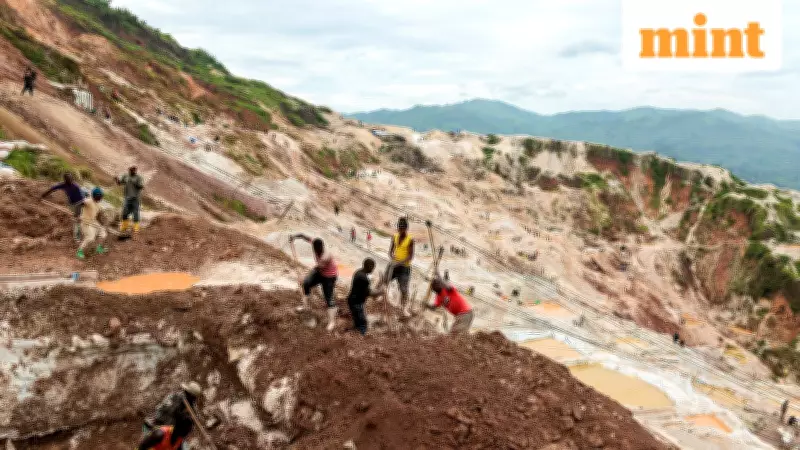
Catastrophic Landslide at Congo's Coltan Mines Claims Over 200 Lives
A devastating landslide earlier this week has collapsed multiple mines at a major coltan mining site in eastern Congo, resulting in the tragic deaths of at least 200 individuals, according to statements from rebel authorities on Saturday.
Details of the Mining Disaster
The catastrophic collapse occurred on Wednesday at the Rubaya mines, which are currently under the control of the M23 rebel group. Lumumba Kambere Muyisa, the spokesperson for the rebel-appointed governor of North-Kivu province, confirmed the incident to The Associated Press. He attributed the landslide to the region's heavy rainfall, which destabilized the mining structures.
"For now, there are more than 200 dead, some of whom are still in the mud and have not yet been recovered," Muyisa stated. He further reported that several other miners sustained injuries and were transported to three health facilities in the town of Rubaya. Ambulances were expected to transfer the wounded on Saturday to Goma, the nearest city located approximately 50 kilometers (30 miles) away.

Immediate Response and Mining Halt
In response to the disaster, the rebel-appointed governor of North Kivu has temporarily suspended all artisanal mining activities at the site. Additionally, the governor has ordered the relocation of residents who had constructed shelters near the mine, aiming to prevent further casualties.
Underlying Causes of Repeated Landslides
A former miner at the site, Clovis Mafare, explained to The Associated Press that landslides have been a recurring issue due to the hazardous mining practices employed. "People dig everywhere, without control or safety measures. In a single pit, there can be as many as 500 miners, and because the tunnels run parallel, one collapse can affect many pits at once," Mafare revealed. He emphasized that the tunnels are manually dug, poorly constructed, and lack proper maintenance, creating a highly unstable environment.
Geopolitical and Humanitarian Context
Rubaya is situated in the mineral-rich eastern region of Congo, an area that has been plagued by decades of violence involving government forces and various armed groups, including the Rwanda-backed M23 rebels. The recent resurgence of M23 has intensified the conflict, exacerbating an already severe humanitarian crisis in the region.
Congo serves as a major global supplier of coltan, a black metallic ore containing tantalum, which is a critical component in the manufacturing of smartphones, computers, and aircraft engines. According to the U.S. Geological Survey, Congo produced approximately 40 percent of the world's coltan in 2023, with other significant suppliers including Australia, Canada, and Brazil. Notably, over 15 percent of the global tantalum supply originates from Rubaya's mines.
Economic and Political Ramifications
In May 2024, M23 rebels seized control of Rubaya and its mines. A United Nations report indicates that since taking over, the rebels have imposed taxes on the trade and transport of coltan, generating an estimated $800,000 per month. This economic exploitation occurs amidst a backdrop of ongoing humanitarian distress.
Eastern Congo has experienced cyclical crises for decades, with various conflicts contributing to one of the world's largest humanitarian emergencies. More than 7 million people have been displaced, including 100,000 who fled their homes this year alone.
Ongoing Conflict and International Involvement
Despite a deal brokered by the United States between the Congolese and Rwandan governments, and ongoing negotiations between rebels and Congo, fighting persists on multiple fronts in eastern Congo. This continued violence results in numerous civilian and military casualties, undermining peace efforts.
The agreement between Congo and Rwanda also facilitates access to critical minerals for the U.S. government and American companies, highlighting the international economic interests intertwined with the region's stability and resource extraction.