Climate Change Severely Impacts Children's Health in Kolkata, Experts Highlight
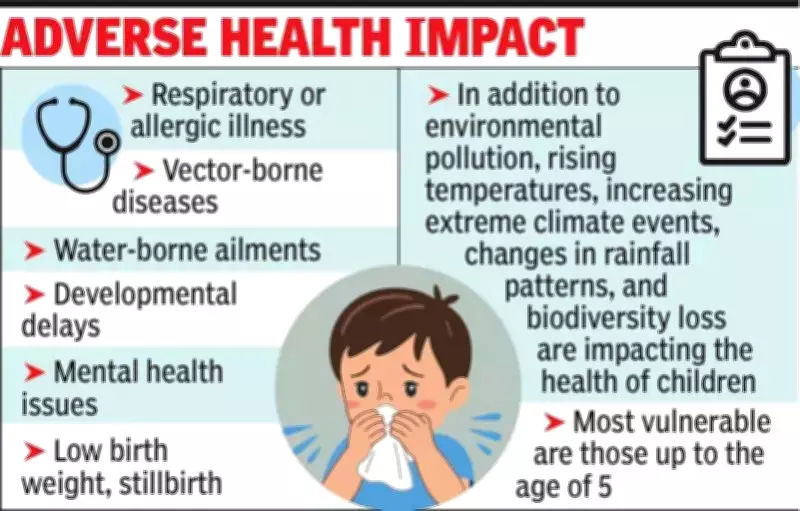
In Kolkata, the escalating effects of climate change—including environmental pollution, rising temperatures, extreme weather events, altered rainfall patterns, and biodiversity loss—are increasingly harming children's health. While climate change affects individuals of all ages, medical professionals emphasize that children, with their still-developing immune systems, are particularly vulnerable to these environmental threats.
Alarming Statistics on Respiratory Disorders and Health Risks
During a recent meeting organized by Unicef in collaboration with the Kolkata Municipal Corporation (KMC), experts discussed the profound health impacts of climate change on the younger population. Ranita Sengupta, Chief Medical and Health Officer of KMC, reported that recent assessments indicate one in every two children in Kolkata suffers from respiratory disorders triggered primarily by air pollution.
The health consequences extend beyond respiratory and allergic illnesses to include vector-borne diseases, water-borne ailments, developmental delays, and mental health issues. Experts warned that climate change can affect children even before birth, leading to pre-term births, low birth weight, or stillbirths due to maternal exposure to environmental risks.

Temperature Rise and Global Trends in Kolkata
Monjur Hossain, Unicef chief for West Bengal, highlighted that Kolkata has experienced a temperature increase of 2.7°C over the past six decades. This rise, combined with air pollution, places an estimated 3.4 lakh children in the city at acute health risk. Globally, infants are facing a 450% increase in heat exposure, a trend that Kolkata and West Bengal are not immune to, further exacerbating health vulnerabilities.
Vulnerability of Young Children and Immune System Concerns
Doctors at the meeting stressed that children's immature immune systems make them highly susceptible to climate-related health issues, with those under the age of five being the most vulnerable. Pulmonologist Arup Haldar explained that inhaling pollutants can impair lung growth in children, resulting in low lung function. Pulmonologist Raja Dhar added that approximately 10 to 15% of his patients are children suffering from respiratory problems, underscoring the widespread nature of this issue.
Prenatal Exposure and Long-Term Cognitive Effects
Unicef health specialist Vandana Bhatia discussed how pregnant women exposed to environmental hazards can negatively affect fetal health, with potential links to reduced IQ levels in children due to climate change impacts. This highlights the far-reaching consequences of climate change, affecting health from the womb through childhood development.
The experts called for urgent action to address these health risks, emphasizing the need for targeted interventions to protect Kolkata's children from the growing threats posed by climate change and environmental degradation.