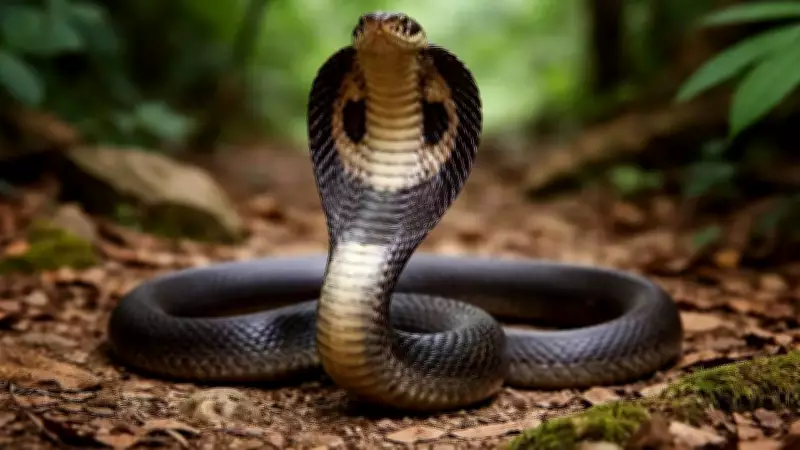
The Chinese Cobra: A Vital Yet Vulnerable Predator of East Asia
The Chinese Cobra, scientifically known as Naja atra, stands as one of the most recognizable venomous snakes across East Asia and Southeast Asia. Belonging to the cobra family, this species is revered for its distinctive hood and potent venom, yet it is often misunderstood due to its fearsome reputation.
Physical Characteristics and Identification
The Chinese Cobra exhibits a medium build, typically measuring between 1.2 to 1.5 meters in length, with some individuals recorded at nearly 2 meters. Its body coloration ranges from shades of brown and grey to almost black, often featuring faint markings or bands on the back. One of its most distinguishing features is the marking on its hood, which can resemble a spectacle or horseshoe shape. Like all cobras, it possesses fixed front fangs for venom injection, and its belly is lighter, varying from yellow to grey. When threatened, it raises the front part of its body, flares its hood, and emits a loud hiss as a warning.
Habitat and Geographic Distribution
Primarily inhabiting southeastern regions of Asia, the Chinese Cobra is found in southern China, Taiwan, northern Vietnam, and northern Laos. It thrives in diverse environments, including:

- Forests and shrublands
- Grasslands and mangroves
- Areas near agricultural land, rice fields, and water sources like rivers or ponds
This adaptable snake seeks shelter in burrows, dense vegetation, or rock crevices during the day to avoid predators and extreme temperatures. It can survive near human settlements where food sources, such as rodents, are abundant. However, habitat destruction due to human activities has led to its classification as a vulnerable species in many regions.
Diet and Hunting Behavior
As a carnivorous predator, the Chinese Cobra feeds on small animals, playing a crucial role in its ecosystem. Its diet includes:
- Rodents
- Frogs and lizards
- Birds and other snakes
Juvenile cobras may start with amphibians or insects before progressing to larger prey. Hunting primarily at night or during cooler periods, the snake uses its acute sense of smell and sensitivity to ground vibrations to locate prey. It delivers a fast-acting venom through its fangs, paralyzing the prey before consuming it whole. This natural pest control helps regulate rodent populations, benefiting agriculture and ecological balance.
Venom and Defensive Behavior
The venom of the Chinese Cobra is highly potent, containing a mixture of neurotoxins and other chemicals that affect the nervous system and body tissues. A bite can lead to severe medical conditions if untreated, but fatalities are preventable with modern medical intervention. Contrary to its aggressive appearance, this snake is not inherently hostile. It prefers to flee when encountering humans and only resorts to defensive displays, such as hood-flaring and hissing, when threatened. Attacks occur solely in self-defense, emphasizing the importance of caution and respect in its presence.
Interesting Facts and Ecological Importance
The Chinese Cobra boasts several fascinating traits. It is also known as the Taiwan Cobra and can resemble non-venomous species when its hood is not flared, complicating identification. Its venom contains over thirty proteins, which are valuable for scientific research and potential medical applications. The scientific name Naja atra derives from Sanskrit, with Naja meaning "snake" and atra referring to its dark coloration.
Despite instilling fear, the Chinese Cobra is an essential contributor to ecological equilibrium. By controlling rodent populations, it supports agricultural health and biodiversity. However, it faces significant threats, including habitat loss, human-wildlife conflict, and illegal wildlife trade. Conservation efforts focused on habitat protection and public awareness are vital to reducing unnecessary killings and ensuring its survival.
Understanding the behavior and role of the Chinese Cobra highlights the importance of even dangerous wild animals in maintaining natural harmony. This species serves as a reminder of the intricate connections within ecosystems and the need for balanced coexistence.