

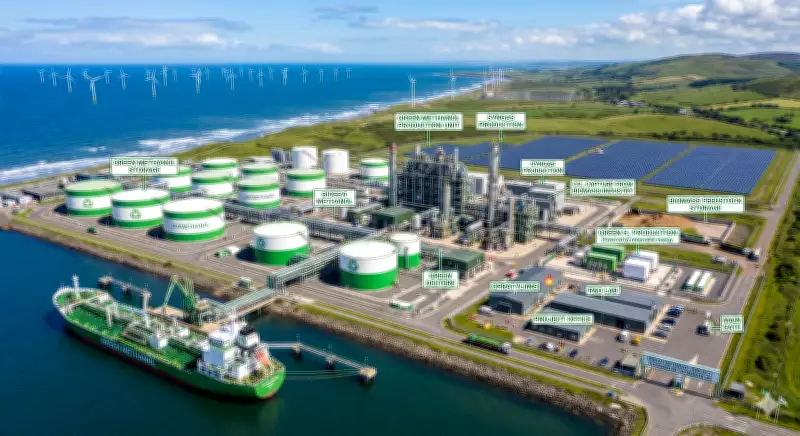
China Takes Major Step Toward Clean Energy with 100,000-Tonne Green Methanol Project
China has moved significantly closer to achieving its clean energy goals with the development of a groundbreaking 100,000-tonne green methanol project in its northeastern region. Located in Kangping County, Shenyang City, within Liaoning province, this initiative represents the initial phase of an ambitious larger plan aimed at reducing carbon emissions and promoting sustainable energy consumption nationwide.
Project Details and Innovative Manufacturing Approach
According to information from the Jilin Provincial Commercial Information Center, this green methanol facility serves as a crucial component of a comprehensive demonstration program for sustainable fuels. The overall annual capacity of the complete project is projected to reach an impressive 500,000 tonnes. The first phase, targeting 100,000 tonnes of green methanol production annually, is expected to be operational within two years.
What makes this project particularly noteworthy is its integrated manufacturing approach. The process combines hydrogen generation through renewable energy sources with biomass gasification, creating a carbon-efficient production cycle. An accompanying wind power plant will supply reliable green electricity throughout the entire manufacturing process, ensuring minimal environmental impact.

The facility will extensively utilize local resources, taking advantage of Kangping County's substantial wind power potential and abundant agricultural waste. The region produces approximately five million tonnes of straw annually, providing ample biomass feedstock for the project.
Green Methanol's Role in the Clean Energy Transition
Green methanol is increasingly recognized as a vital component in the global shift toward sustainable fuels. Unlike conventional methanol production methods that rely on fossil fuels, green methanol utilizes renewable resources including biomass and green hydrogen.
The northeastern China plant represents a pioneering example of large-scale green methanol production. The facility will generate green hydrogen using biomass and approximately 100MW of wind power to facilitate methanol production. Industry reports describe this as "the first stage of a more significant e-fuel project," with research supporting such approaches for effective decarbonization.
Green methanol proves especially valuable for industries where direct electrification remains challenging, particularly shipping and aviation. Beyond fuel production applications, it also serves as an effective means to store and transport energy derived from renewable sources.
China's Growing Leadership in Green Fuel Technologies
In recent years, China has emerged as a global leader in green fuel technology, particularly in large-scale methanol production. Chinese facilities benefit from significant economies of scale and faster implementation compared to counterparts in other countries.
A World Economic Forum report indicates that many green methanol plants in China exceed capacities of 100,000 tonnes annually, making them more economically viable in the long term. The current project represents just the beginning of China's expansion plans, which include:
- 300,000 tonnes of sustainable aviation fuel production annually
- 100,000 tonnes of green ammonia production each year
This comprehensive approach demonstrates China's holistic strategy toward sustainability, supported by governmental policies promoting expansion in methanol, ammonia, and aviation fuel production using green hydrogen.
The construction of this 100,000-tonne green methanol project in northeastern China signifies more than just a technological breakthrough—it represents a broader transformation in energy production and consumption patterns. By leveraging renewable energy, locally available materials, and advanced technology, this initiative establishes a new benchmark for sustainable fuel production worldwide.






