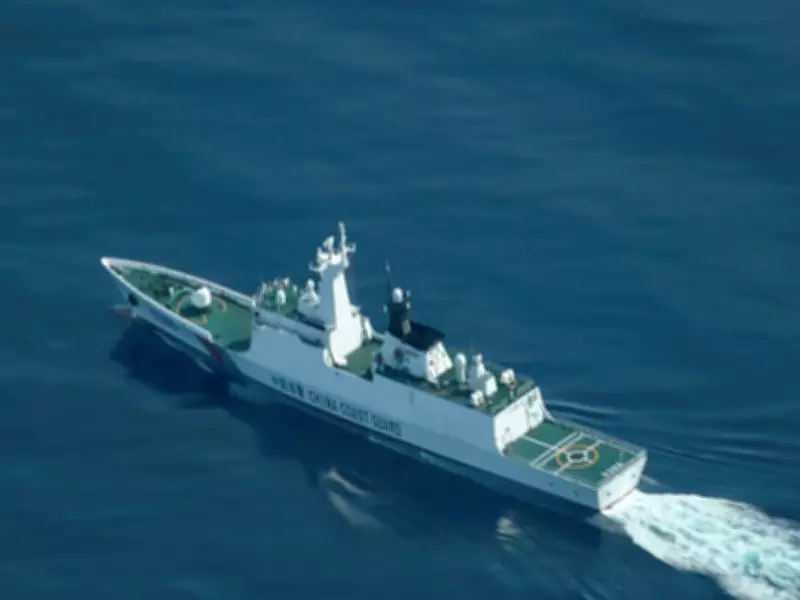
China Responds with Military Patrols Following US-Philippine Joint Exercises
In a significant development that underscores the escalating geopolitical tensions in the Asia-Pacific region, China has conducted combat readiness patrols in the South China Sea. This military maneuver comes as a direct response to the recent joint drills held between the United States and the Philippines, which have been viewed by Beijing as a provocative act in the disputed waters.
Background of the US-Philippine Joint Drills
The United States and the Philippines recently concluded a series of joint military exercises aimed at enhancing their defense cooperation and interoperability. These drills, which included naval and air force components, were conducted in the South China Sea, a region where China asserts extensive territorial claims. The exercises were part of a broader strategy by the US to bolster its alliances in the Indo-Pacific, countering China's growing influence and military presence.
According to military analysts, the US-Philippine drills were designed to demonstrate a united front against potential aggression and to ensure freedom of navigation in the strategically vital sea lanes. The Philippines, a key US ally in the region, has been increasingly vocal about its concerns regarding China's activities in the South China Sea, including the construction of artificial islands and military installations.

China's Military Response and Strategic Implications
In reaction to these developments, China's People's Liberation Army (PLA) announced the commencement of combat readiness patrols in the South China Sea. These patrols involve advanced naval vessels, aircraft, and other military assets, signaling Beijing's determination to assert its sovereignty and military capabilities in the area. The PLA stated that the patrols are intended to maintain regional stability and safeguard China's national interests, but they have been widely interpreted as a show of force aimed at deterring further US-Philippine cooperation.
The timing of China's patrols is particularly noteworthy, as it follows closely on the heels of the US-Philippine exercises, suggesting a tit-for-tat dynamic that could heighten risks of miscalculation or conflict. Experts warn that such military posturing by both sides increases the likelihood of accidental encounters or escalations, potentially destabilizing the entire region. The South China Sea is a critical maritime corridor for global trade, and any disruption could have far-reaching economic consequences.
Regional and Global Reactions
The escalation has drawn attention from other nations in the region and beyond. Countries like Vietnam, Malaysia, and Indonesia, which also have claims in the South China Sea, are closely monitoring the situation, concerned about the potential for increased militarization. Meanwhile, global powers such as Japan and Australia have expressed support for freedom of navigation and called for peaceful resolution of disputes in accordance with international law, including the United Nations Convention on the Law of the Sea (UNCLOS).
In diplomatic circles, there are calls for dialogue and de-escalation to prevent the situation from spiraling out of control. However, with both China and the US showing little sign of backing down, the prospects for immediate resolution appear slim. The ongoing tensions highlight the broader strategic competition between China and the US, with the South China Sea serving as a flashpoint in their rivalry for influence in the Indo-Pacific.
Future Outlook and Potential Scenarios
Looking ahead, the situation in the South China Sea is likely to remain volatile, with continued military activities from all sides. Analysts predict that China may increase its patrols and exercises in the area, while the US and its allies could respond with more frequent freedom of navigation operations and joint drills. This cycle of action and reaction could lead to a new normal of heightened military presence, raising the stakes for regional security.

Moreover, the economic implications cannot be ignored. The South China Sea is a vital route for oil and gas shipments, and any conflict could disrupt energy supplies and trade flows, impacting global markets. As such, stakeholders are urging for confidence-building measures and multilateral talks to address the underlying issues, but progress has been slow due to deep-seated territorial disputes and strategic mistrust.
In conclusion, China's combat readiness patrols in the South China Sea, triggered by the US-Philippine joint drills, represent a significant escalation in regional tensions. This development underscores the complex interplay of military, diplomatic, and economic factors at play, with potential ramifications for stability in the Asia-Pacific and beyond. As the situation evolves, the international community will be watching closely, hoping for a peaceful path forward amidst growing uncertainties.