

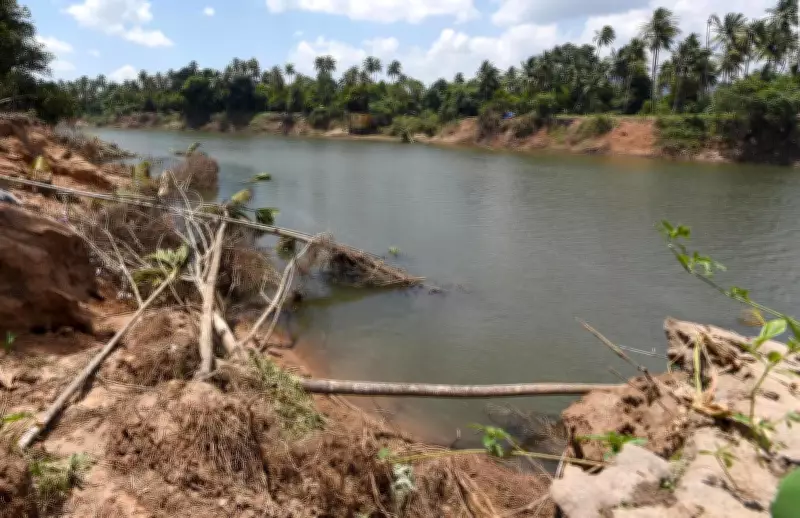
Thrissur: Several agencies have joined forces to launch a targeted ecological restoration of the endangered riparian ecosystem of the Chalakudy River, which holds immense ecological significance. The primary phase of the project involved identifying endangered plant species in the riparian vegetation of Chalakudy and areas facing severe degradation. These activities were completed last year.
Second Phase Focuses on Biodiversity Restoration
In the second phase, which was launched this week, the focus will be on planting multiple species with the objective of restoring biodiversity in degraded areas, nearly in their original pattern. An interesting feature of the programme is the involvement of the local populace, especially the Kadar tribal community.
Collaborating Agencies
The biodiversity management committees (BMC) of local bodies at Vazhachal, Chalakudy, and Athirappilly, tribal communities, the National Rural Employment Guarantee Scheme, the botany department of MES Asmabi College in Kodungallur, the forest department, forest development agencies, and local self-government institutions, including the district panchayats of Thrissur and Ernakulam, are collaborating in the project. The Western Ghats Hornbill Foundation is coordinating the project.

Nature-Based Solutions Framework
The Nature-based Solutions (NbS) framework developed by the institution's researchers, Amitha Bachan and Devika Anilkumar, was utilized to predict potential conservation and restoration areas for the species. Saplings to be planted in the degraded areas were grown in special nurseries.
For plant species identified as endangered, the team adopted a different method. "We addressed the regeneration bottleneck by replicating riverine conditions in a nursery setting—soaking seeds in a water-sand medium for 14 days to break dormancy. This technique yielded more than 400 robust saplings, which were out-planted into degraded stretches identified through ecological niche modeling (ENM)," Bachan said.
Broader Impacts of the Initiative
This initiative will facilitate climate change mitigation, conservation of rare flora and fauna including hornbills, achievement of sustainable development goals, and reduction of human-wildlife conflict. It could also lead to enhanced efficiency of NREGS and the Green India Mission, as workers in those projects could be deployed for maintaining the newly planted saplings.






