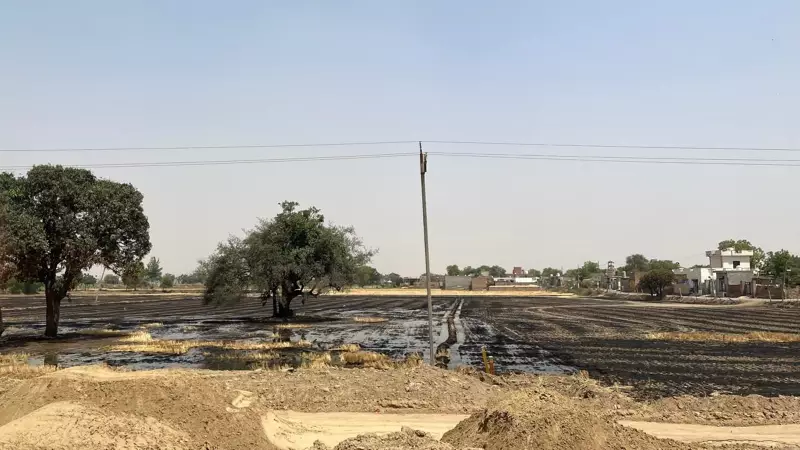
In a significant policy shift to combat year-round air pollution, the Commission for Air Quality Management (CAQM) has for the first time ordered the states of Punjab and Haryana to implement ground-level monitoring and enforcement to eliminate farm fires during the summer wheat harvest season. This move extends the pollution watchdog's vigil beyond the traditional October-November paddy stubble-burning period.
Directive for Rabi Season Action Plan
The CAQM wrote to the chief secretaries of Punjab and Haryana on December 1, 2025, directing them to submit a comprehensive crop residue action plan for the wheat cycle ending before summer 2026. The directive mandates that agricultural activities following the winter wheat harvest in April-May will now come under direct on-the-ground scrutiny, a first for the rabi season.
This decision stems from the recognition of a high year-round baseline of air pollution in northwestern India. This baseline, exacerbated by annual kharif stubble burning, pushes air quality into the hazardous zone each winter. The CAQM's letter noted that despite measures to eliminate paddy stubble-burning in 2025, both detected and undetected fire events persisted, indicating gaps in implementation.

Alarming Satellite Data on Summer Fires
Satellite-based monitoring by the Indian Agricultural Research Institute (IARI) under its CREAMS program has revealed alarming data on wheat residue burning. From April 1 to May 31, 2025, satellites recorded 10,207 fire events in Punjab and 1,832 in Haryana. Other states also showed high counts: 14,398 in Uttar Pradesh, 34,429 in Madhya Pradesh, and 49 in Delhi.
Notably, the fire counts for Uttar Pradesh, Madhya Pradesh, and Delhi were the highest since IARI began this summer monitoring in 2022. These summer stubble-burning numbers present a stark contrast to the recent October-November period, where farm fires in Punjab and Haryana fell to historical lows. Paddy stubble burning in these states is a major contributor to the severe air pollution that blankets Delhi-NCR every winter.
Closing the Implementation Gaps
The CAQM's expanded vigilance follows its earlier query to states on November 21. The Commission had sought detailed reports on fire locations that satellites failed to detect, the tracking methods used for such events, and the preventive and punitive actions taken against paddy residue burning.
By extending its mandate to the rabi season, the CAQM aims to build on the progress seen in the kharif season and address pollution sources throughout the year. The year-round fight is crucial as IARI's active fire monitoring during the kharif season (September 15 to November 30) frequently coincides with air quality in the capital deteriorating to 'Severe' levels (AQI 400+). The success of this new summer directive will depend on the robustness of the states' action plans and the effectiveness of their on-ground enforcement mechanisms.