

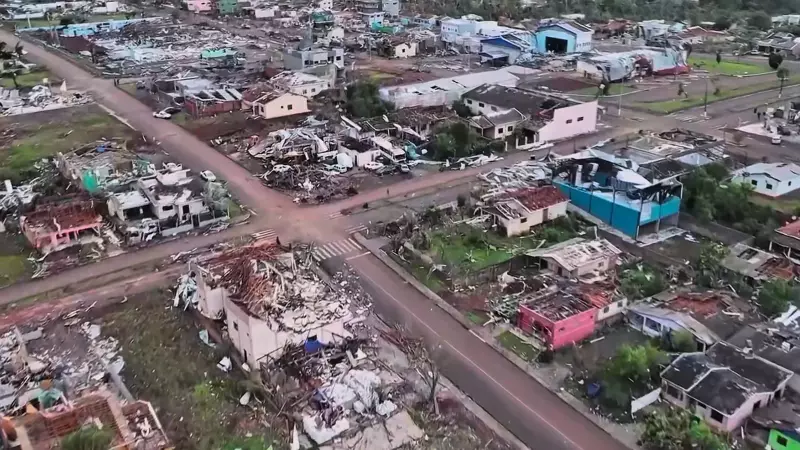
A devastating tornado ripped through southern Brazil, leaving a trail of destruction and claiming at least six lives while injuring hundreds more. The powerful storm struck the state of Rio Grande do Sul on Thursday, causing widespread damage to infrastructure and property.
Destruction Across Multiple Cities
The tornado caused significant damage in several municipalities, with Rio Grande do Sul bearing the brunt of the natural disaster. According to state governor Eduardo Leite, the storm system affected multiple communities, creating a complex emergency situation that required immediate response from authorities.
Emergency services worked through challenging conditions to assess the full extent of the damage. The state government confirmed that at least six people lost their lives in the catastrophic weather event, while the number of injured continues to be evaluated, with early estimates suggesting hundreds of people suffered injuries of varying severity.

Massive Infrastructure Damage and Rescue Operations
The tornado's fury left countless homes destroyed, power lines downed, and critical infrastructure severely compromised. Rescue teams faced immense challenges reaching affected areas due to debris-blocked roads and continuing adverse weather conditions.
Governor Eduardo Leite emphasized the severity of the situation, stating that the state government had mobilized all available resources to respond to the crisis. The coordinated effort involved multiple agencies working to provide medical assistance, shelter, and support to the affected communities.
Hospitals in the region reported being overwhelmed with casualties as medical staff worked tirelessly to treat the injured. The scale of the disaster required setting up temporary medical facilities to handle the influx of patients needing urgent care.
State of Emergency and Recovery Efforts
In response to the catastrophic damage, authorities declared a state of emergency in the affected regions. This declaration enables faster allocation of resources and streamlines coordination between different levels of government in addressing the immediate needs of the population.
The tornado in southern Brazil represents one of the most severe weather events to hit the region in recent years. Meteorologists noted that the storm system developed rapidly, catching many residents by surprise despite weather warnings issued earlier in the day.
Recovery operations continue as teams work to restore essential services and clear debris from affected areas. The focus remains on locating any missing individuals and providing necessary support to families who have lost homes and livelihoods in the disaster.
International weather monitoring organizations have been tracking the aftermath of the severe weather system, which continues to affect parts of southern Brazil. The incident highlights the increasing frequency of extreme weather events in the region and the importance of robust emergency preparedness systems.






