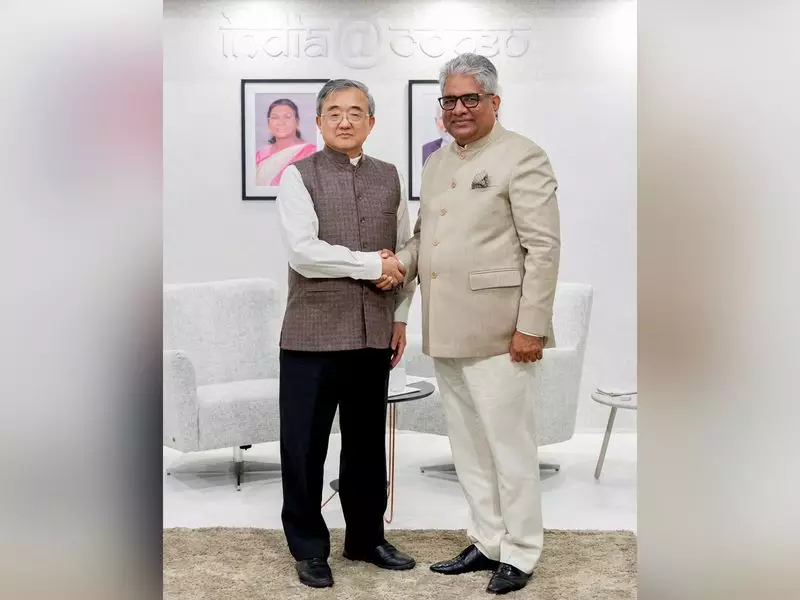
In a significant diplomatic engagement, India's Union Minister for Environment, Forest and Climate Change Bhupender Yadav met with China's Special Envoy for Climate Change Liu Zhenmin for crucial discussions on global environmental challenges. The high-level meeting took place on Tuesday, marking an important step in climate diplomacy between the world's two most populous nations.
Strategic Climate Dialogue Between Major Powers
The meeting between Minister Yadav and Envoy Liu Zhenmin represents a critical moment in international climate negotiations. Both officials emphasized the importance of enhanced cooperation between India and China in addressing pressing global environmental issues. The dialogue focused on strengthening bilateral ties through climate action and exploring avenues for mutual collaboration.
The discussions occurred against the backdrop of upcoming international climate conferences, particularly the COP29 summit scheduled to take place in Baku, Azerbaijan later this year. Both nations recognized the urgency of coordinated action to meet global climate targets and address the escalating environmental crisis.

Key Discussion Points and Shared Objectives
During their comprehensive dialogue, the leaders explored multiple facets of climate cooperation. Minister Yadav highlighted India's remarkable progress in achieving its climate goals ahead of schedule, demonstrating the country's commitment to environmental stewardship. The minister specifically mentioned India's success in reducing emission intensity and expanding renewable energy capacity.
Special Envoy Liu Zhenmin acknowledged the shared challenges and opportunities facing both developing nations. The conversation delved into practical cooperation mechanisms, technology transfer possibilities, and financial frameworks that could support climate mitigation and adaptation efforts in both countries.
Both parties reaffirmed their commitment to the principles of equity and common but differentiated responsibilities, which form the foundation of international climate agreements. This alignment is particularly significant given both nations' status as major emerging economies with substantial energy needs and environmental responsibilities.
Broader Implications for Global Climate Governance
This high-level engagement carries substantial weight in the international climate arena. As two of the world's largest greenhouse gas emitters and rapidly developing economies, cooperation between India and China could significantly influence the trajectory of global climate action. Their collaborative approach could set new precedents for climate diplomacy among emerging economies.
The timing of this meeting is strategically important, coming months before critical international climate negotiations where unified positions among developing nations could shape outcomes on climate finance, technology transfer, and adaptation support.
The dialogue also addressed the need for developed nations to fulfill their climate finance commitments, a longstanding concern for both countries. Minister Yadav and Envoy Liu emphasized that adequate financial support from developed economies is essential for enabling ambitious climate action in developing nations.
This meeting builds upon previous climate dialogues between the two nations and signals a continued commitment to addressing climate change through bilateral cooperation and multilateral engagement. The outcomes of this discussion are expected to influence both countries' positions in upcoming international climate forums and potentially pave the way for joint initiatives in renewable energy, clean technology, and climate resilience.