Gurgaon's Bhindawas Wetland Shows Signs of Habitat Stress During Bird Census
Conservationists conducted the Asian Waterbird Census at Bhindawas wetland in Gurgaon on January 17, 2026. They recorded a total of 9,483 birds representing 52 different species. The count reveals important data about this protected Ramsar site.
Visible Habitat Challenges Emerge
Ecologist and ornithologist TK Roy led the bird counting exercise. He expressed concern about the wetland's current condition. "Large sections of the wetland have dried up completely," Roy explained. "Water hyacinth covers many water surfaces, and increased human activity continues to damage the habitat."
Roy serves as the Asian Waterbird Census state coordinator for Delhi with Wetlands International South Asia. He noted that Bhindawas, one of Haryana's key wetlands, shows "visible habitat stress." The expert observed that winter migration numbers appear lower this season compared to previous years.

Waterbirds Serve as Ecological Indicators
Roy emphasized the importance of waterbirds for ecosystem health. These birds function as key ecological indicators. Wetlands support breeding and wintering populations while providing essential services like water purification and biodiversity support.
Experts say declining bird numbers often signal broader environmental problems. Reduced populations typically indicate pressure on food availability, water quality, and overall habitat integrity. The census data helps identify these emerging challenges.
Census Reveals Species Composition
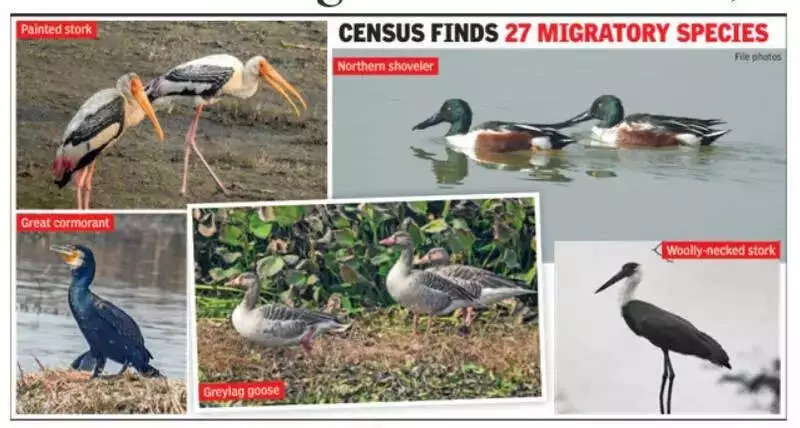
The 2026 count documented 27 resident species and 27 winter migratory species. Three globally threatened species from the IUCN Red List also appeared in the census results.
Prominent winter migratory species included Northern Shoveler, Common Teal, Gadwall, and Greylag Goose. These birds typically travel from central and northern Asian regions, including Russia and Siberia.
Key resident species recorded during the count included Indian Spot-billed Duck, Common Moorhen, and Purple Swamphen. These birds live at the wetland throughout the year.
Globally Threatened Species Documented
The census identified three globally threatened species at Bhindawas wetland. These included Greater Spotted Eagle (a resident species), Common Pochard (winter migratory), and Ferruginous Duck (winter migratory). Their presence highlights the wetland's international conservation significance.
Conservation Efforts and Monitoring
A wildlife department official discussed ongoing conservation measures. The department regularly monitors the wetland through surveillance and periodic field checks, especially during migration seasons.
"We coordinate with biodiversity and wetland stakeholders," the official stated. "Scientific counts like this provide valuable inputs for planning conservation interventions."
International Conservation Context
The Asian Waterbird Census forms part of the global International Waterbird Census. This annual exercise occurs across 27 Asian countries. Wetlands International South Asia compiles combined data from these counts.
The organization shares this information with international bodies including IUCN, the Ramsar Convention, the Convention on Migratory Species, and CITES. Conservation planners and policymakers use this data to support their work across the region.
The census at Bhindawas wetland provides crucial insights amid growing concerns about habitat shrinkage and climate change impacts on migratory patterns.