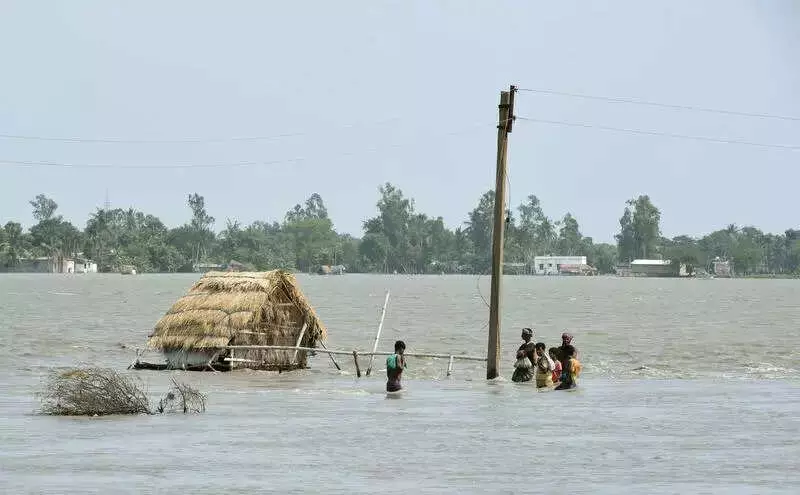
Pune Study Predicts Major Shift in Bay of Bengal Cyclone Patterns by 2050
Scientists at the Indian Institute of Tropical Meteorology in Pune have released alarming new findings about future cyclone activity in the Bay of Bengal. Their research indicates that post-monsoon tropical cyclones will undergo a significant northward shift by the year 2050.
Changing Storm Tracks Will Redistribute Regional Risks
The study projects that this geographical shift will bring increased cyclone activity to West Bengal and northern Odisha. Simultaneously, it will reduce the cyclone threat facing Tamil Nadu and Andhra Pradesh. These coastal states currently bear the brunt of most Bay of Bengal cyclones.
Dr. Anant Parekh, one of the study authors, explained the implications clearly. "In the future, cyclone tracks will shift more towards the north," he stated. "This means more cyclones for the eastern coast of India over Odisha and West Bengal and further towards Bangladesh and Myanmar. It suggests relief for Tamil Nadu and Andhra Pradesh."

Detailed Analysis Reveals Specific Movement Changes
Researchers employed high-resolution climate models to analyze cyclone patterns through 2050. Their analysis revealed specific changes in cyclone movement directions:
- Cyclones moving in a north-northeastward direction will increase from 21.2% to 31.5%
- West-northwestward moving cyclones will decline significantly
The study focused specifically on post-monsoon cyclones occurring between October and December. This period traditionally sees maximum cyclone activity in the Bay of Bengal region.
Atmospheric Wind Changes Drive the Northward Shift
The research identified specific atmospheric changes causing this geographical shift. Enhanced westerly winds over the western and central Bay of Bengal, combined with stronger southerly winds over the northern part of the basin, create a cyclonic circulation pattern.
This altered wind pattern steers cyclones northward instead of allowing their traditional westward movement. Currently, most Bay of Bengal cyclones move north-northwest, typically making landfall in Andhra Pradesh and Tamil Nadu.
Research Basis and Reliability
The projections come from the SSP5-8.5 scenario, representing the highest greenhouse gas emission pathway. However, the study specifically examines the near-future period of 2015-2050.
Dr. Parekh emphasized the reliability of these new projections. "The inference reliability is relatively better than earlier models," he noted. "These projections come from high-resolution models that provide more accurate data."
Urgent Call for Enhanced Disaster Preparedness
The study carries important implications for disaster management across the region. Researchers strongly emphasize the need to improve disaster preparedness in areas facing increased cyclone risks.
"Considering the nature of projected cyclone tracks, the study highlights potential adverse impacts on Bay of Bengal rim countries and advocates for enhanced disaster preparedness," explained one scientist involved in the research.
The research team included Rushikesh Adsul, Vineet Kumar Singh, Anant Parekh and C. Gnanaseelan from IITM Pune's Climate Variability and Prediction division. Their complete findings appear in the scientific journal Scientific Reports.
This Pune-based research provides crucial early warning for coastal communities and disaster management authorities. The projected changes require proactive planning and adaptation strategies across vulnerable regions.