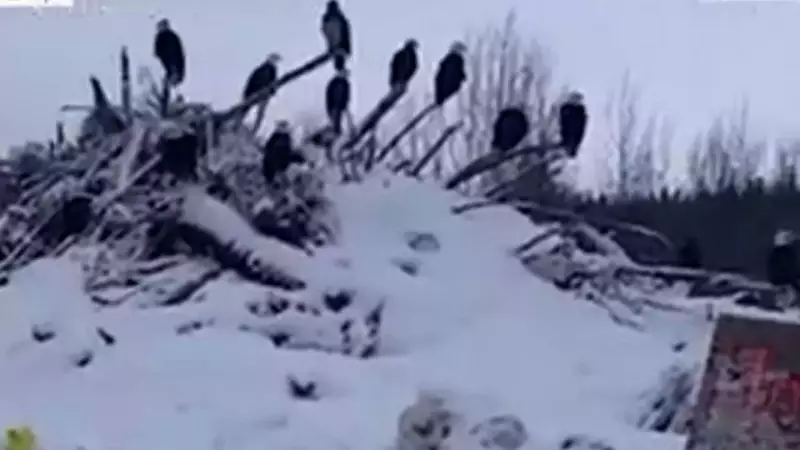
Hundreds of bald eagles gathered in one spot during winter in northern British Columbia. This unusual event occurred in the frozen mountains, creating a remarkable sight against snow-laden peaks and icy river valleys.
Why Eagles Flock Together in Winter
Bald eagles typically live alone and guard their territories fiercely. They symbolize freedom and power across North America. Seeing so many together in winter breaks their normal behavior patterns completely.
The harsh weather conditions forced this change. Limited food sources and freezing temperatures pushed the eagles toward specific locations. Fast-moving rivers that remain partially open provide crucial feeding grounds. These waterways offer accessible fish, especially salmon, which sustain the eagles through cold months.

Survival Strategies in Frozen Landscapes
Winter transforms the eagles' habits dramatically. Snow covers the ground, lakes freeze over, and daylight hours shorten. Conserving energy becomes essential for survival.
The eagles abandon their territorial instincts temporarily. They cluster near reliable food sources instead. Predictable prey movements through snowy environments help them adjust hunting techniques effectively.
This apparent bird concentration represents a smart survival decision. Environmental pressures override normal social rules during challenging seasons.
Understanding Rare Group Behavior
Outside breeding seasons or regular feeding areas, bald eagles usually remain solitary. Adults avoid competing with each other, particularly around food sources. Witnessing hundreds gathering indicates temporary social flexibility.
Experts confirm this behavior only happens where food is abundant and easily accessible. While competition exists, the benefits outweigh the drawbacks during winter months.
Advantages of Winter Gatherings
Group behavior offers multiple survival advantages:
- Eagles can watch each other locate food, saving precious energy searching frozen landscapes
- Dominant birds often find food first, indirectly helping other group members
- Younger and weaker eagles gain protection within the group, reducing starvation risks
This cooperative behavior demonstrates remarkable adaptability. The eagles prioritize survival over their usual solitary preferences.
Scientific Insights From Eagle Gatherings
Large winter congregations provide unique research opportunities. Scientists study bald eagles under environmental stress to understand various aspects:
- Population size and age structure within specific regions
- Feeding patterns and dietary adaptations during winter
- Social tolerance levels when resources become limited
This data helps researchers gauge species resilience against extreme weather and habitat pressures. Such information grows increasingly valuable as climate change disrupts food availability and migration patterns.
Ecological Indicators of Health
Mass eagle gatherings often signal ecological vitality. They indicate healthy fish populations, undisturbed waterways, and preserved forest habitats. These natural assemblies act as environmental barometers, highlighting areas where ecosystems function properly.
The British Columbia event showcases nature's intricate balance. Even in freezing conditions, life finds ways to persist and adapt through remarkable behavioral changes.