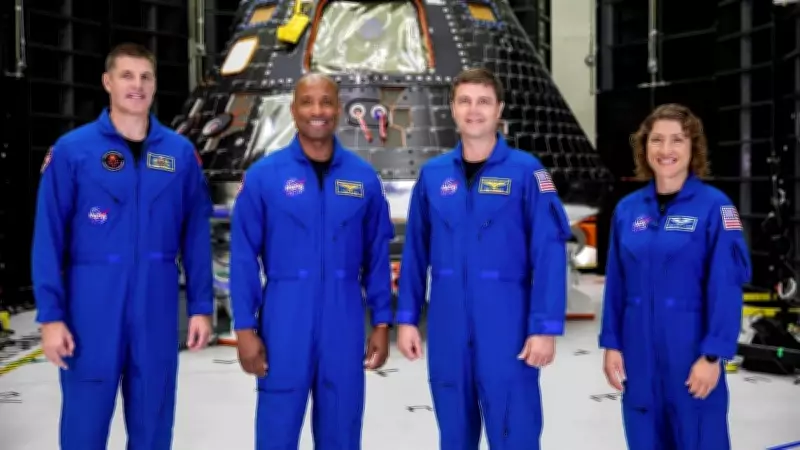
Historic Milestone: NASA's Artemis II Crewed Moon Mission Set for April Launch
In a groundbreaking development for space exploration, NASA has announced that the Artemis II test flight is scheduled for launch on April 1, 2026. This mission represents a monumental achievement as it will be the first crewed journey to the Moon in over 50 years, reviving human lunar exploration after decades of hiatus.
Artemis II: Pioneering Crewed Flight with Advanced Spacecraft
The Artemis II mission is poised to make history by being the inaugural flight with astronauts on board the powerful Space Launch System (SLS) rocket and the Orion spacecraft. This test flight is a critical step in NASA's broader Artemis program, which aims to return humans to the lunar surface and establish a sustainable presence there. The SLS rocket, designed for deep-space missions, will propel the Orion spacecraft on a trajectory around the Moon, testing its systems and crew capabilities in a real-space environment.
Key objectives of the Artemis II mission include:

- Validating the performance and safety of the SLS rocket and Orion spacecraft with a human crew.
- Conducting extensive tests on life support, communication, and navigation systems during the lunar flyby.
- Gathering crucial data to prepare for future Artemis missions, including lunar landings.
Reviving Lunar Exploration After Half a Century
The last crewed mission to the Moon was Apollo 17 in 1972, making Artemis II a significant milestone in space history. This mission underscores NASA's commitment to advancing human spaceflight and exploring new frontiers. By sending astronauts beyond low-Earth orbit for the first time in decades, Artemis II paves the way for more ambitious endeavors, such as establishing a lunar base and eventually missions to Mars.
Experts highlight that the success of Artemis II could reinvigorate global interest in space science and technology, fostering international collaborations and inspiring future generations of explorers. The mission's timing aligns with ongoing efforts to enhance space infrastructure and develop new technologies for long-duration space travel.
Preparations and Global Impact
NASA and its partners have been meticulously preparing for the Artemis II launch, conducting rigorous simulations and safety checks. The crew, consisting of experienced astronauts, will undergo extensive training to handle the challenges of the mission. This launch is not just a technical feat but also a symbol of human ingenuity and perseverance in the face of cosmic challenges.
The Artemis program has garnered widespread attention from the scientific community and the public alike, with many anticipating its potential to unlock new discoveries about the Moon and beyond. As the launch date approaches, the world watches with bated breath, ready to witness a new chapter in space exploration unfold.