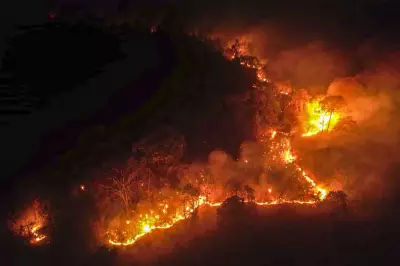
The relentless transformation of the Aravalli range stands as a stark symbol of a deeper national dilemma. As India charges forward on its path of economic progress, its ancient natural shields are being systematically stripped away. This process, argues analyst Jagdish Rattanani, reveals a development model dangerously devoid of ecological wisdom, exposing the profound perils of a narrow, modern rationalism.
The Price of Progress: A Vanishing Natural Fortress
The Aravalli hills, among the world's oldest mountain ranges, are not merely a geological feature. They act as a crucial green barrier against desertification, a vital groundwater recharge zone, and a biodiversity hotspot. However, the current development paradigm views them primarily as an obstacle to expansion or a resource to be mined. This has led to widespread encroachment, illegal mining, and real estate projects that fragment and destroy this fragile ecosystem. The date 29 December 2025, when the opinion was last updated, marks a point in an ongoing crisis, not an isolated event.
Stripped of Ecological Intelligence
Jagdish Rattanani's central critique targets the intellectual foundation of this model. Modern rationalism, in this context, is a mindset that prioritizes measurable economic output and short-term gains over environmental sustainability and long-term resilience. It reduces the complex value of a forest to the price of its timber or the land it occupies. This approach fails to account for the Aravalli's role in:

- Regulating the climate of the entire National Capital Region.
- Providing water security to millions.
- Preventing the spread of the Thar Desert.
When ecological intelligence is removed from planning, the result is a brittle form of progress that risks catastrophic environmental feedback.
The Perils and a Path Forward
The consequences of this takeover are already manifesting in the form of worsened air pollution, declining groundwater tables, and increased vulnerability to climate events. The situation in the Aravallis serves as a critical warning for similar regions across India. It underscores the urgent need to redefine 'development' to include ecological health as a non-negotiable pillar, not an afterthought.
The argument calls for a paradigm shift—from conquest of nature to coexistence with it. This requires robust legal protection for ecologically sensitive areas, stringent enforcement against violations, and the integration of traditional knowledge with scientific management. The survival of the Aravallis is a test case for India's ability to forge a future where progress does not come at the cost of its natural heritage.