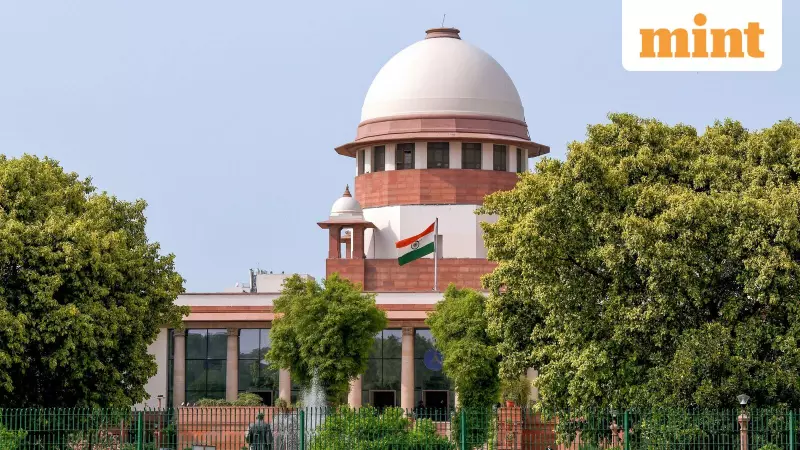
The Supreme Court of India is once again deliberating on a critical environmental issue that could reshape the future of the National Capital Region (NCR). At the heart of the matter is a proposed radical redefinition of the ancient Aravalli mountain range, a move that ecologists warn could devastate its fragile ecology and strip away its vital role as a natural shield for Delhi.
The Battle of Definitions: 2010 Wisdom vs. 2025 Proposal
This judicial review stems from a controversial stance the Court took on 20 November 2025, influenced by the Ministry of Environment, Forests and Climate Change (MoEFCC). The Court is now re-evaluating that position. The conflict pits a 2010 definition by the Forest Survey of India (FSI) against a new 2025 report.
The 2010 FSI report, commissioned by the Supreme Court itself, defined the Aravalli range comprehensively. It included hills with a slope of three degrees or more, with a 100-metre buffer zone from their base, plus the surrounding valleys, plateaus, and depressions. This definition aimed to protect the entire ecological system.

In contrast, the 2025 report—prepared by a committee led by the MoEFCC but including FSI members—proposes a starkly different criterion. It suggests that only elevations rising at least 100 metres from the local relief should be counted as part of the Aravalli range. Media analyses suggest this could reduce protected hills in Rajasthan from over 12,000 to just about 1,048, though the FSI has disputed these specific figures.
Consequences: Mining Threats and a Weakened Natural Shield
The implications of adopting the 2025 definition are severe and far-reaching. Large hilly tracts in districts like Sawai Madhopur and Chittorgarh would instantly lose their protected status as Aravalli hills. This shrinkage would open vast areas to mining and other developmental activities.
While the Supreme Court's November ruling called for a Management Plan for Sustainable Mining (MPSM), past evidence indicates that once legal protections based on topography are removed, sustainable mining norms are often circumvented. The MoEFCC's record on environmental clearances has faced criticism for alleged laxity, raising fears of irreversible damage.
The stakes are incredibly high for the NCR's environment. The Aravalli range acts as a crucial natural barrier against the Thar desert. In summer, it blocks searing, dust-laden desert winds from hitting the capital's urban sprawl. During the monsoon, its slopes and valleys capture rainfall, helping recharge groundwater and preserving biodiversity. Even smaller hills play an integral part in this defensive system for millions of residents.
The Case for the Precautionary Principle
Proponents of mining argue that modern life and strategic needs require mineral extraction. The Aravallis hold resources like limestone for cement and potentially rare earth elements critical for India's strategic goals. The need, however, is for careful prospecting and restricted, well-regulated mining in specific zones, not a blanket opening of all sub-100m hills.
This is where the precautionary principle becomes paramount. This legal doctrine advocates for extreme caution when decisions risk causing major, irreversible harm. With Delhi's air quality perennially in crisis, the Aravalli's role as a green lung and windbreak is not a luxury but a necessity for public health.
The Supreme Court's final decision will set a precedent. It must choose between a narrow definition that offers short-term mineral gains and a broader, ecologically wise one that safeguards a geographical heritage and protects the future of one of the world's most populous regions. The hope is that caution, and long-term vision, will prevail.