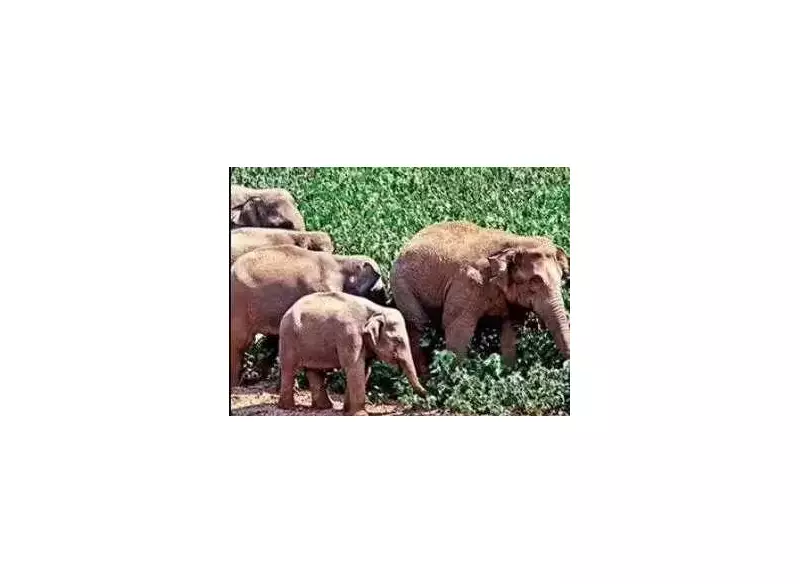
For nearly fifteen years, villages in the northern parts of Andhra Pradesh have lived under a shadow of fear and frequent crop destruction due to roaming wild elephants. Now, the state forest department has finalized a comprehensive, multi-faceted strategy to address this persistent human-elephant conflict.
A Long-Standing Conflict and Its Origins
The problem first began in 2007 when wild elephants migrated into Andhra Pradesh from the neighboring Lakheri forests of Odisha. Since that initial incursion, the districts of Vizianagaram and Srikakulam have borne the brunt of the conflict. Villagers have endured significant agricultural damage, faced threats to their safety, and lived with constant anxiety. Currently, two separate herds frequently stray from forest areas into human settlements, escalating tensions.
The Multi-Pronged Strategy Takes Shape
To formulate a lasting solution, Deputy Chief Minister K Pavan Kalyan actively sought expertise from the Karnataka forest department. This collaboration has secured the assistance of four trained kumki elephants. These captive elephants are specially trained to safely guide and drive wild herds away from villages and back towards forested areas, ideally herding them towards the Odisha border.

Simultaneously, the Andhra Pradesh authorities plan to engage with Odisha's forest department, seeking cooperation to take back some of the elephants that originated from there. For the remaining animals, a detailed translocation plan is being prepared. Officials have identified the Gucchimi elephant camp in Parvathipuram Manyam district as a potential temporary holding area. The final destination for many could be the Sri Venkateswara National Park in the Seshachalam Hills.
Studying Behavior and Finalizing the Plan
Principal Chief Conservator of Forests Santi Priya Pandey emphasized that the strategy includes robust fallback measures. If translocation efforts face hurdles, the elephants will be accommodated at the secured 400-acre Gucchimi camp, where solar fencing work is currently in progress. The deployment of the kumki elephants has been deliberately delayed by about a month to ensure this camp is fully prepared.
Before finalizing any action, forest officials will spend the next two months closely studying the behavior and composition of the herdstranslocation to Sri Venkateswara National Park a preferred and feasible option. Renowned wildlife expert Raman Sukumar from the National Board for Wildlife has already conducted a site visit to assess the ground conditions ahead of the kumki elephants' deployment.
Established in 1989, the Sri Venkateswara National Park is a 353-square kilometre biosphere reserve known for its rich biodiversity and scenic waterfalls like Talakona. Its adjacency to the Sri Venkateswara Zoological Park also provides necessary infrastructure. This comprehensive plan represents the state's most concerted effort yet to bring a permanent end to a conflict that has plagued North Andhra for a decade and a half.