

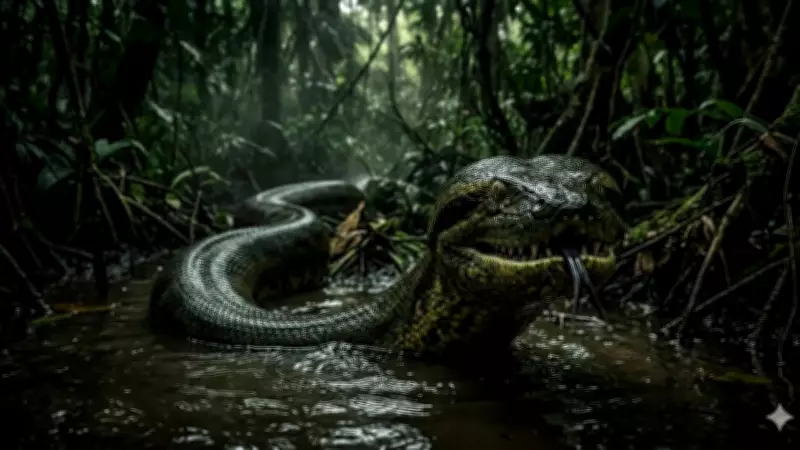
Anacondas: Masters of Aquatic Ambush in South America
Anacondas stand among the most iconic reptiles globally, instantly recognized for their association with slow-moving rivers, dense vegetation, and remote wetlands. Unlike many predators built for speed, these snakes rely on sheer muscle power and immense patience. They spend much of their lives in water, where their bodies move with a surprising quietness that belies their size. Although sightings are rare, their presence profoundly shapes local ecosystems in subtle yet significant ways. Experts emphasize their role as apex ambush predators, influencing prey populations across vast regions. In floodplains and tropical basins, anacondas appear almost perfectly adapted to fluctuating water levels and seasonal shifts, with their behavior, diet, and biology all reflecting a life deeply intertwined with aquatic environments.
Physical Traits and Adaptations of Anacondas
Female green anacondas are notably larger than males, showcasing one of the most extreme size differences among snake species. Females can reach lengths exceeding 15 feet, with some exceptional individuals growing even longer, while males are generally much smaller. Their bodies are thick and heavily muscled, supporting both constriction and efficient movement through water. Their skin often displays green, brown, or yellow tones with darker markings, patterns that help them blend seamlessly into aquatic vegetation and shadows. Eyes and nostrils are positioned toward the top of the head, allowing them to breathe while remaining mostly submerged. Their jaws are highly flexible, with bones connected by elastic ligaments rather than rigid joints, enabling them to swallow prey larger than their own head.
Behavior and Daily Patterns of Anacondas
Anacondas are predominantly solitary creatures, spending extended periods in or near water and typically becoming active at night or during low-light conditions. During cooler or drier periods, they may reduce their activity significantly, sometimes remaining in sheltered spots or shallow mud until conditions improve. Seasonal flooding plays a major role in shaping their behavior, as they adapt to changing environments. They rarely engage with humans, with encounters usually resulting in retreat rather than confrontation, highlighting their elusive nature.

Taxonomy and Species Differences Among Anacondas
Anacondas belong to the family Boidae, a group of non-venomous constrictor snakes. Within this family is the genus Eunectes, a name linked to their strong swimming ability. The best-known species is the Green Anaconda, widely regarded as the heaviest snake on Earth. It is closely followed in study by other species such as the Yellow Anaconda, the Dark-spotted Anaconda, and the Bolivian Anaconda. These species share similar traits but differ in size, distribution, and specific patterns, reflecting their adaptations to various habitats.
Habitat: Where Anacondas Live and Why It Matters
Anacondas are found exclusively in South America, ranging across river systems like the Amazon Basin and the Orinoco River basins. They prefer habitats in swamps and flooded areas with slow-moving waters, with seasonal savannas and tropical wetlands holding particular significance. Their size and behavior often change in response to rainfall patterns, as regions become flooded during certain times and experience receding waters in others, showcasing their adaptability to dynamic environments.
How Anacondas Hunt and Feed
Anacondas are carnivorous and rely on ambush tactics rather than pursuit. They wait patiently in shallow water or near riverbanks, often remaining still for long periods. When prey approaches, they strike quickly, using constriction without venom. They grip prey with curved teeth, then coil around the body, applying pressure that restricts breathing and circulation, leading to rapid incapacitation. Their diet is broad, including fish, birds, turtles, caimans, capybaras, and even deer, with feeding choices depending on opportunity rather than strict preference. After a large meal, digestion can take weeks, during which their activity decreases noticeably.

Breeding Cycle of Anacondas
Breeding begins with what is often described as a breeding aggregation, where a single female releases pheromones that attract multiple males. Several males may gather and compete around her. Anacondas give birth to live young, with litters ranging from around 20 to 40 offspring, though larger females may produce more. Newborn snakes are already capable of independent survival, but they face many threats from predators like birds of prey and caimans.





