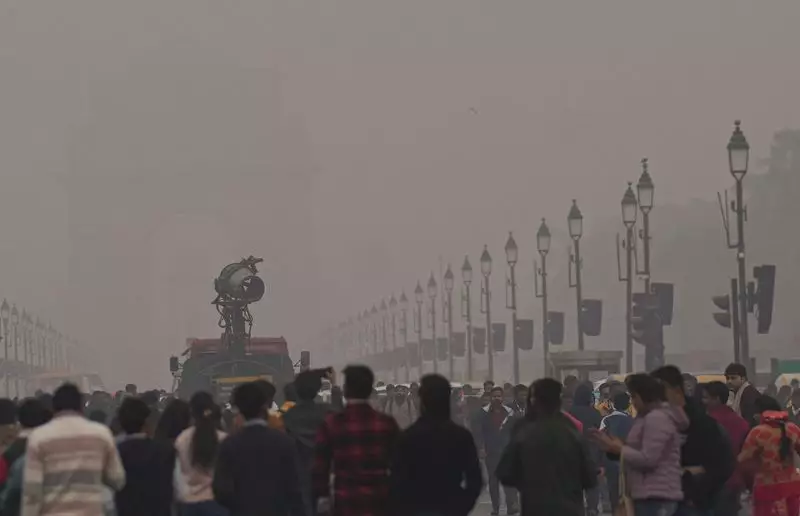
The Commission for Air Quality Management (CAQM) has uncovered widespread disregard for pollution control norms in the National Capital Region (NCR). In a recent enforcement drive, the commission identified a staggering 591 instances of violations, primarily related to dust and the open burning of waste.
Widespread Violations Across Key Sectors
The commission's report, compiled from inspections between October 1 and November 12, paints a grim picture of compliance. The bulk of the violations, a total of 591, were concentrated in the critical areas of dust control and waste management. These are major contributors to the hazardous particulate matter that blankets the region every winter.
Specifically, authorities found 214 cases related to violations of dust control regulations at construction and demolition sites. Furthermore, they recorded 377 incidents of open burning, including the burning of municipal solid waste, plastic, and other hazardous materials. This blatant flouting of rules occurs despite the annual implementation of the Graded Response Action Plan (GRAP), designed specifically to curb such activities during the poor air quality season.

Immediate Directives Issued to Authorities
In response to these alarming findings, the CAQM has moved swiftly to demand action. The commission has issued strict directives to the concerned municipal bodies and pollution control committees in Delhi, Haryana, and Uttar Pradesh.
The authorities have been instructed to immediately report on the actions taken against the identified violators. This includes detailing the penalties imposed and the corrective measures enforced. The CAQM's proactive stance underscores the urgency of the situation as the region battles its annual air quality crisis.
A Call for Stringent Enforcement and Accountability
The revelation of hundreds of violations highlights a significant gap between policy and on-ground enforcement. While GRAP stages are declared and various restrictions are announced, the CAQM's data suggests that compliance remains a major challenge.
This enforcement drive signals the commission's intent to move beyond advisories and ensure accountability. The focus is now on local bodies to demonstrate that they are actively penalizing polluters and implementing the mandated pollution control measures. The effectiveness of this crackdown will be closely watched, as it is crucial for mitigating the severe public health impact of NCR's toxic air.
The coming weeks will be a critical test for the administrative machinery in the NCR states. Their response to the CAQM's directives will determine whether the region can move towards more effective pollution control or continue to grapple with the same enforcement failures year after year.