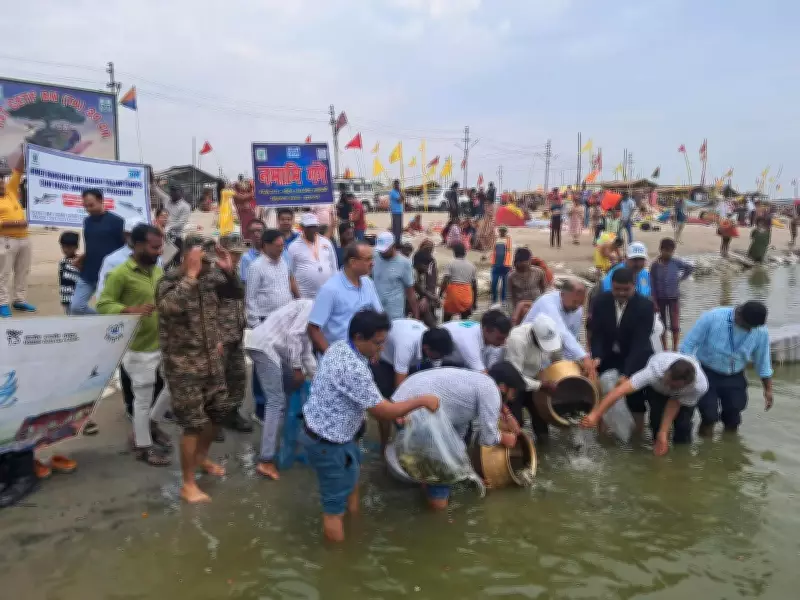
The Indian Council of Agricultural Research (ICAR)-Central Inland Fisheries Research Institute (CIFRI) released 30,000 fish fingerlings of Indian major carp species, including Catla, Rohu, and Mrigal, into the Ganga at Sangam Nose on Wednesday. This initiative was carried out under the National Mission for Clean Ganga (NMCG) with the aim of enhancing fish diversity and restoring the river's ecology.
Approximately 455 kg of fish biomass was introduced into the river during the ranching programme. The effort is designed to strengthen the ecosystem and promote biodiversity in the Ganga. The event saw participation from various stakeholders, including officials, scientists, and local community members.
Key Participants and Remarks
The event was attended by Santosh Kumar Shukla, executive secretary of the National Academy of Sciences India (NASI), Prayagraj. Shukla highlighted the cultural and ecological significance of the Ganga and emphasized the necessity of keeping the river clean for future generations. Officials from ICAR-CIFRI explained that this initiative supports ongoing efforts under the Namami Gange programme to restore river health and aquatic life.

Scientific Insights and Conservation Goals
Senior scientists, including Dharm Nath Jha and BR Chavan, briefed participants on the importance of fish species in maintaining river ecology and the broader objectives of the conservation drive. They elaborated on how fish populations contribute to the ecological balance of the river system.
Community Involvement
Representatives from the Uttar Pradesh fisheries department, Ganga Task Force, Ganga Prahari, and Ganga Vichar Manch took part in the programme. Fishermen, pilgrims, fish traders, and local residents also attended and expressed their support for river conservation efforts. The collaborative participation underscores the community's role in preserving the Ganga's ecosystem.
This release of fish fingerlings is part of a series of measures under the Namami Gange programme, which aims to rejuvenate the Ganga river basin through pollution abatement, conservation, and sustainable management.