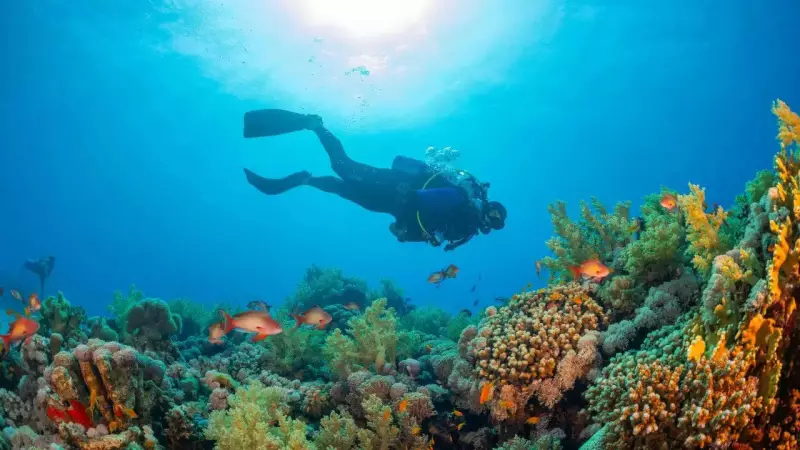
In a remote and rugged part of the world, scientists have made a stunning discovery. Off the south coast of New Zealand, they found a massive black coral. This incredible organism has been thriving for an amazing 300 years.
A Glimpse into the Deep Ocean
The coral stands over four metres tall. It has sprawling roots that spread widely. This biological phenomenon offers researchers a rare look into the deep ocean. Much of this environment remains unknown and poorly studied.
This finding proves a crucial point. A tremendous amount of research still needs to be done. Scientists must work to understand these delicate ecosystems. They need to learn about the organisms that live there.

Slow Growth and Unique Habitat
The black coral grows very slowly. It serves as a habitat for a wide range of deep ocean creatures. The discovery clearly shows the pressing need for research. Conservation efforts for these species are urgently required.
Giant black coral in New Zealand's deep waters reveals centuries of slow growth. The recently discovered coral grows over four metres high. Its branches spread over four metres as well.
Unlike corals found in shallower waters, black corals are invertebrates. They grow slowly and thrive in low light conditions. This makes it quite possible that the newly found coral may have been growing undetected for several centuries.
Rare Specimen Discovery
The research team was led by Professor James Bell. He works at Te Herenga Waka-Victoria University of Wellington. Professor Bell discussed the specimen he found. He called it a very rare species. Common black corals in New Zealand do not normally grow beyond two to three meters long.
Ecological Role of Black Corals
Black corals are much more than just beautiful specimens. Their dense, branching structures are crucial. They provide shelter and reproduction grounds for many deep ocean organisms. This includes invertebrates and young fish.
Large colonies like the one found are particularly important. They help reproduce offspring in regions with slow growth rates. Richard Kinsey shared his thoughts on the discovery. He is a senior biodiversity ranger with New Zealand's Department of Conservation.
"In almost 20 years diving in Fiordland, I've rarely found coral of this size," Kinsey said. "It is certainly the largest I have ever encountered."
Such corals form part of a complex ecosystem. This system thrives in the deep ocean. The biodiversity there is very significant for ocean health, even if it is not always noticed.
Threats to Black Corals
Despite their ecological importance, black corals face numerous threats. Their slow growth and long life span make them very vulnerable. They are prone to physical disturbances from human activities.
Key threats include anchoring from boats and deployment of fishing gear. Habitat degradation due to human activity also poses a serious risk. Protection for the Fiordland Marine Area exists under New Zealand's Marine Protected Areas Policy. This policy aims to protect biodiversity in various ecosystems.
Conservation Efforts in Fiordland
Researchers emphasise that protection must be enhanced. Effective enforcement, monitoring, and habitat mapping are essential. These measures will help conserve black corals and other fragile species.
Researchers from Victoria University have started targeted surveys. They are working with the Department of Conservation and Fiordland Marine Guardians. Their goal is to identify ecologically important zones.
They are calling on divers and local operators to report any black coral sightings. Specifically, they want reports of corals over four metres tall. This will help build accurate distribution data. It will also assess how common large colonies are within the fiords.
Identification and Protection Challenges
Even though they are called black corals, their live form often appears pale or white. This can make identification difficult for scientists in the wild. Sometimes, microscopic observation or DNA sequencing is necessary. This is especially true in areas with several different coral types.

In New Zealand, black corals receive protection under the Wildlife Act 1953. It is an offense to take, damage, or possess them. Enforcement relies largely on proactive surveillance by conservation authorities. Community reporting also plays a vital role.
Scientific Significance
Black corals have a long lifespan. They can serve as bio-records, providing information about historical oceanic conditions. This is especially important for scientists studying paleoclimatology. It allows them to analyze historical data about temperature and current levels.
Beyond their scientific value, black corals have other uses. In other parts of the world, such as the Pacific and Mediterranean regions, people use them in jewelry and traditional medicine. This shows their cultural and economic importance. It further underscores why they must be conserved.
The discovery of this 300-year-old black coral is a remarkable event. It highlights the mysteries still hidden in our oceans. It also stresses the urgent need for continued exploration and protection of these vital marine environments.