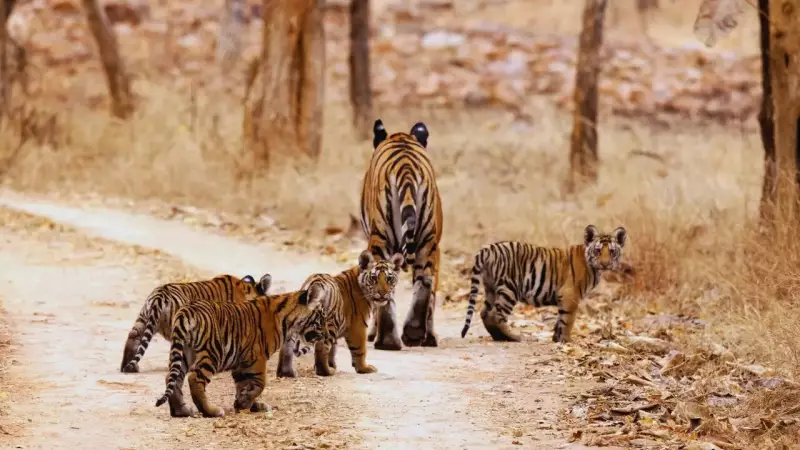
India, which hosts nearly 75% of the world's wild tigers, witnessed a concerning spike in tiger mortalities in 2025. According to the latest data released by the National Tiger Conservation Authority (NTCA), the country documented 166 tiger deaths over the course of the year. This figure marks a significant increase of 40 deaths compared to the 126 fatalities recorded in 2024, raising fresh alarms about habitat pressures and conservation challenges.
State-Wise Breakdown and the Cub Mortality
The NTCA data reveals a grim geographical distribution of these losses. Madhya Pradesh accounted for the highest number of deaths at 55. It was followed by Maharashtra with 38 tiger mortalities, Kerala at 13, and Assam at 12. A particularly distressing detail is that among the nationwide total, 31 of the deceased tigers were cubs, highlighting the vulnerability of the youngest members of the population.
Territorial Pressure: A Primary Culprit Behind the Deaths
Wildlife experts and media analyses point to territorial infighting caused by intense space constraints as a major factor behind the majority of these deaths. India's celebrated success in tiger population recovery has brought forth new challenges. The surge in numbers has intensified competition for space, especially in core forest areas.

This is starkly evident in Madhya Pradesh, a state hailed as India's 'tiger state'. Official figures show the state's tiger population soared from 308 in 2014 to 526 in 2018, and further to 785 in 2022—a rise of nearly 60% in eight years. Experts argue this rapid growth has inevitably led to heightened conflict among tigers vying for dominance and territory.
A Timeline of Tragedy and Causes of Death
The NTCA data provides a chronological account of the losses in 2025. The year's first reported death was an adult male tiger found in the Bramhapuri forest division of Maharashtra on January 2. Merely three days later, an adult female tiger died in the Pench Tiger Reserve, Madhya Pradesh. The final reported casualty of the year was an adult male tiger found in North Sagar, Madhya Pradesh, on December 28.
In Madhya Pradesh, while a majority of deaths were attributed to natural causes, the threats were multifaceted. A few cases were linked to poaching, and seven deaths resulted from electrocution. Forest officials note that dispersing sub-adults and young tigers are most at risk. After cubs leave their mothers at around 20 months, particularly males, they embark on a perilous journey to establish their own territories, often clashing with resident adults.
Conservation Success and the Path Ahead
India's tiger conservation efforts have been globally lauded. The last all-India tiger estimation in 2023 revealed numbers grew from 2,967 in 2018 to 3,682 in 2022, an annual growth rate of about 6%. The nation now safeguards close to three-fourths of the global tiger population.
However, this very success underscores an urgent need. The increasing tiger count makes the establishment and protection of ecological corridors, reduction of human-tiger conflict, and expansion of suitable habitats more imperative than ever. The fragmentation of forest corridors and expansion of human-dominated landscapes are severely limiting free movement, trapping tigers in isolated pockets and fueling deadly competition.