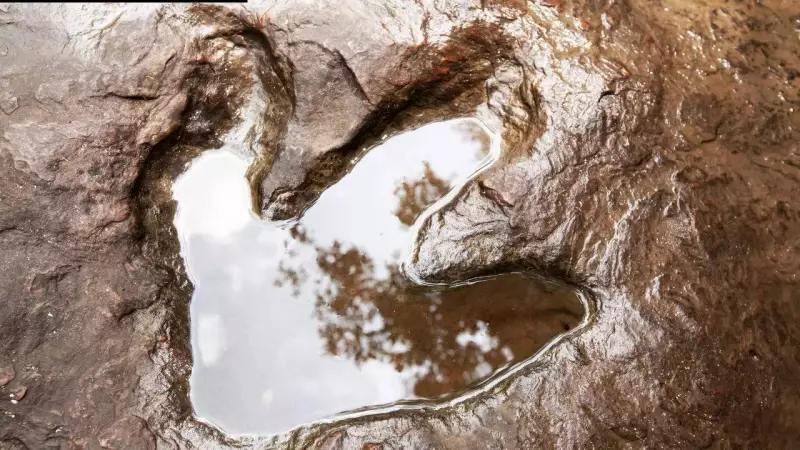
At first glance, the windswept plateau in central Bolivia seems unremarkable. A landscape of pale rock, dry earth, and whispering grasses that most would hurry past. But this quiet expanse in Torotoro National Park holds a secret millions of years in the making, etched not in bone, but in stone.
A Prehistoric Pathway Frozen in Stone
Researchers have uncovered a spectacular fossil site at Carreras Pampa, revealing more than 16,000 individual dinosaur footprints. This makes it one of the largest concentrations of dinosaur tracks ever recorded globally. The prints are preserved on what was once the muddy shore of a vast freshwater lake during the late Cretaceous period, roughly 68 million years ago—a time just before dinosaurs faced extinction.
Unlike scattered bones, these tracks remain exactly where the creatures left them, offering an unparalleled snapshot of daily life. The sheer number and preservation quality provide insights into behaviour that skeletal fossils rarely can.

Decoding the Direction: A Lakeside Highway
One of the most compelling patterns observed is the alignment of the tracks. Many footprints point in a similar direction, running parallel along the ancient shoreline rather than crisscrossing chaotically. Published research in the journal PLOS One suggests this indicates repeated, routine movement.
Dinosaurs likely used the lake's edge as a natural pathway, possibly for access to water, food, or as an easier travel route. The orderly nature of the tracks implies calm, purposeful movement over long periods, not panic or flight.
Wading and Swimming: Rare Underwater Traces
The findings go beyond simple walkways. Evidence suggests some dinosaurs were moving through water. Ripple marks from ancient water currents are preserved alongside many tracks, formations that only occur in shallow water.
Some footprints appear stretched, smeared, or are unusually shallow, cutting through these ripples. Researchers interpret this as signs of dinosaurs wading or even swimming close to shore, where only parts of their feet occasionally scraped the bottom. Such "underwater" traces are exceptionally rare in the fossil record.
Most of the footprints belong to theropods—bipedal, three-toed carnivorous dinosaurs ranging from small to very large. The variation in depth and clarity of the prints hints at differences in size, weight, speed, and gait among the animals that frequented this lakeside.
Why Carreras Pampa is a Global Treasure
The geological layers tell a story of a stable, long-lasting lake environment with fine sediments ideal for preserving impressions. This wasn't a one-time event but a place dinosaurs returned to generation after generation.
This site transforms our understanding from isolated anatomy to lived experience. It captures moments of daily routine—direction, spacing, even hesitation—offering a quieter, more relatable view of prehistoric life. The silent plateau of Torotoro now speaks volumes, reminding us that sometimes, the most profound stories are found not by looking ahead, but by looking down at the ground beneath our feet.