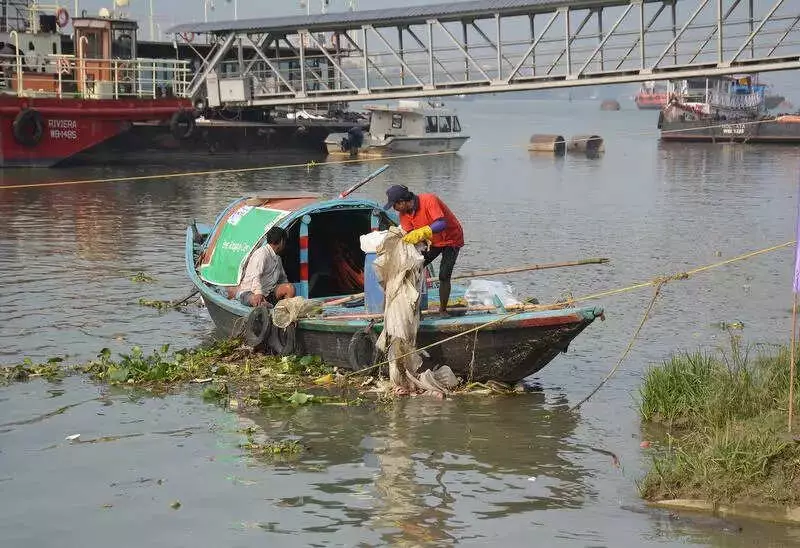
In a significant environmental effort, Kolkata's Hooghly River has seen the removal of a staggering 16 tonnes of waste from its surface in just 90 days. This massive clean-up drive, spearheaded by The Sea Explorers Institute (SEI), commenced in June this year and focuses on a critical one-kilometer stretch of the river.
A Pilot Project with a Long-Term Vision
The intensive cleaning operation is concentrated between Prinsep Ghat and Baje Kadamtala Ghat. This pilot project is not a short-term effort; it is scheduled to continue until March 2026. Volunteers conduct the clean-up three days a week, dedicating two hours each session. On average, this relentless effort leads to the daily recovery of approximately 200 kg of waste, including plastic, glass bottles, and other non-biodegradable materials.
SEI recently demonstrated the drive to the public and has expressed interest in expanding its scope to other areas, including Metiabruz and Howrah. The initiative serves a dual purpose: creating a crucial baseline data set on river waste while actively raising awareness among local communities about the imperative of maintaining a clean river ecosystem.

Alarming Discoveries and Community Engagement
The sheer volume of waste is concerning, but the nature of some debris has raised serious alarms. Sudeshna Chatterjee, the Secretary General of SEI, pointed out that what they collect is only the waste floating on the surface, with a significant amount more sinking to the riverbed. A particularly shocking find has been the presence of biomedical waste, such as medicine vials, mixed within the garbage.
Echoing this concern, Professor Punarbasu Chatterjee from the Environmental Science department at Calcutta University labeled the discovery of biomedical waste as alarming. Alongside the physical clean-up, SEI volunteers are engaging directly with local communities. Project coordinator Sudipa Pal explained that they are encouraging riverside vendors to adopt sustainable practices, like using shaal leaf bowls instead of thermocol and disposing of waste in bins. Convincing vendors has been challenging, but the team has successfully involved some tea sellers and boatmen in the drive, educating them about the severe health risks linked to river pollution.
The Upstream Challenge and a Hopeful Future
A major challenge highlighted by SEI is that apart from the waste dumped directly in this stretch, a huge amount flows from upstream. The institute hopes its model will inspire and be replicated by other groups upstream, creating a cumulative effect that could truly transform the water quality of the Hooghly River. This community-driven project stands as a testament to the impact of sustained local action in tackling the pervasive issue of river pollution.