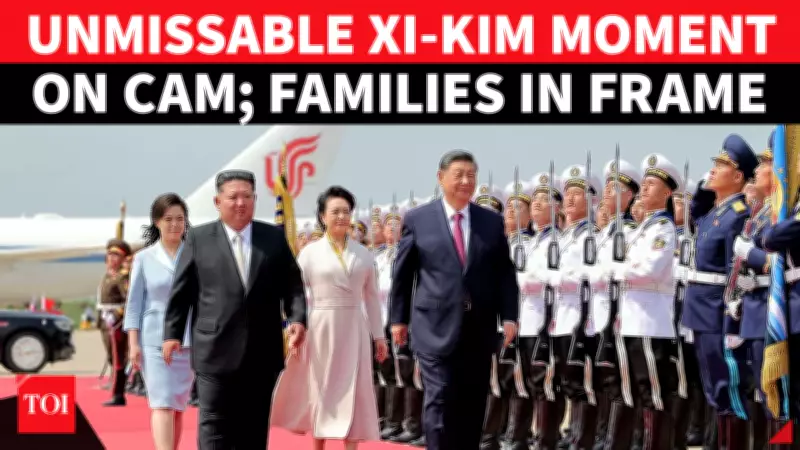
A rare state visit by Chinese President Xi Jinping to North Korea culminated in a series of highly symbolic events alongside Kim Jong Un. From paying respects at the Friendship Tower to observing military ceremonies and a grand farewell at Pyongyang's airport, the visit highlighted the historical and strategic ties between the two neighbours. The carefully curated optics suggest both Beijing and Pyongyang are keen to project an image of solidarity and partnership as geopolitical dynamics continue to shift across the region and beyond.
Symbolic Gestures of Friendship
The visit featured a tree-planting ceremony, where both leaders planted a sapling together, symbolizing the growth of bilateral relations. They also took a ride on a golf cart through the grounds, a casual yet intimate moment that contrasted with the formal proceedings. The emotional farewell at the airport, with Kim personally seeing Xi off, underscored the personal rapport between the two leaders.
Strategic Implications
Analysts view the visit as a demonstration of unity amid changing geopolitical dynamics. China and North Korea have historically been allies, and this visit reinforces their partnership in the face of pressures from the United States and other regional powers. The display of friendship is intended to send a message of solidarity to the international community.

The visit also included military ceremonies, showcasing North Korea's armed forces and their allegiance to the leadership. Xi's presence at these events lent legitimacy to Kim's regime and highlighted China's support for North Korea's sovereignty.
In conclusion, the Xi-Kim summit in Pyongyang was a carefully orchestrated affair aimed at reinforcing the strategic alliance between China and North Korea. The symbolic acts of tree planting, golf cart rides, and emotional farewells were not merely personal gestures but political statements in a rapidly changing world order.