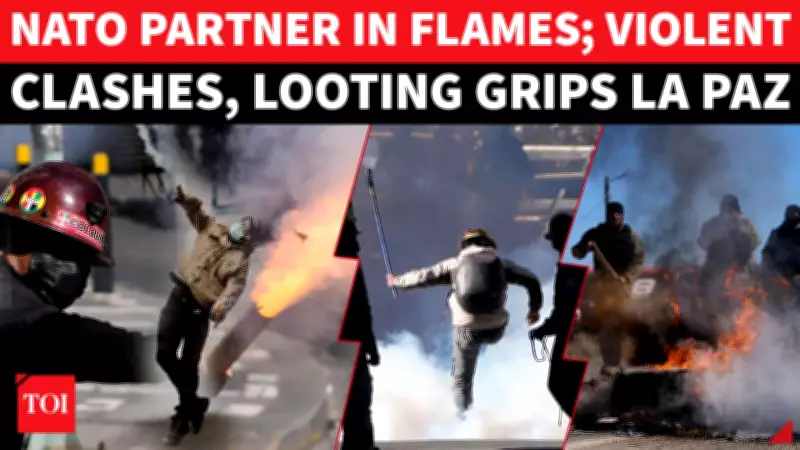
Bolivia's capital erupted into turmoil as anti-government demonstrators demanding President Rodrigo Paz's resignation clashed with police forces in dramatic street battles. Protesters attempted to push toward the Government Palace while security forces responded with tear gas and heavy deployments. The unrest unfolded during the 'March for Life', bringing together miners, farmers, unions and Evo Morales supporters. With road blockades, shortages and political tensions intensifying, Bolivia faces a deepening national crisis as calls grow for political change and authorities urge calm.
Escalation of Protests
The 'March for Life' initially began as a peaceful demonstration but quickly turned violent when protesters tried to breach security barriers near the Government Palace. Police fired tear gas canisters to disperse the crowds, leading to widespread looting and clashes across several districts of La Paz. Witnesses reported that some demonstrators threw stones and Molotov cocktails at security forces, who responded with water cannons and baton charges.
Political Demands
The protesters, a coalition of miners, farmers, union members and supporters of former President Evo Morales, are demanding President Rodrigo Paz step down over allegations of corruption and mismanagement of the economy. They accuse his administration of failing to address rising inflation, fuel shortages and unemployment. The government has condemned the violence and called for dialogue, but opposition leaders insist that Paz must resign immediately.

Impact on Daily Life
Road blockades set up by demonstrators have paralyzed transportation and caused shortages of food, fuel and medical supplies in several regions. Schools and businesses remain closed in La Paz as the city braces for further unrest. International observers have expressed concern over the deteriorating situation, urging both sides to exercise restraint and seek a peaceful resolution.
Historical Context
Bolivia has a long history of political instability, with frequent protests and changes in government. The current crisis echoes the 2019 turmoil that led to the ouster of Evo Morales. President Paz, who took office in 2023, has faced mounting criticism over his handling of the economy and allegations of authoritarianism. The 'March for Life' is the largest protest movement since his election, drawing tens of thousands of participants from across the country.
International Reactions
The United Nations and several Latin American governments have called for calm and dialogue. The Organization of American States (OAS) has offered to mediate between the government and opposition groups. Meanwhile, neighboring countries are monitoring the situation closely, fearing that the crisis could spill over borders. The United States has issued a travel advisory for its citizens in Bolivia, warning of the volatile security situation.
Looking Ahead
As the standoff continues, both sides appear entrenched in their positions. President Paz has refused to resign, vowing to restore order and prosecute those responsible for the violence. Opposition leaders have vowed to intensify protests until their demands are met. The coming days will be crucial in determining whether Bolivia can find a peaceful path out of this crisis or descend further into chaos.