In Vadodara, known as Gujarat's Cultural Capital, residents waiting for a city bus in the scorching summer heat often end up not at their destination but in a 108 ambulance due to heatstroke. The prolonged exposure under the sun while waiting for buses has become a serious health risk.
Lack of Direct Routes
Even when a bus arrives, the journey is rarely straightforward. Commuters traveling between areas like Sama and Jambuva face a cumbersome journey due to the absence of direct city bus connectivity. They are forced to route via the Janmahal depot and switch buses, despite better road infrastructure that could support direct routes.
Outdated System and Limited Upgrades
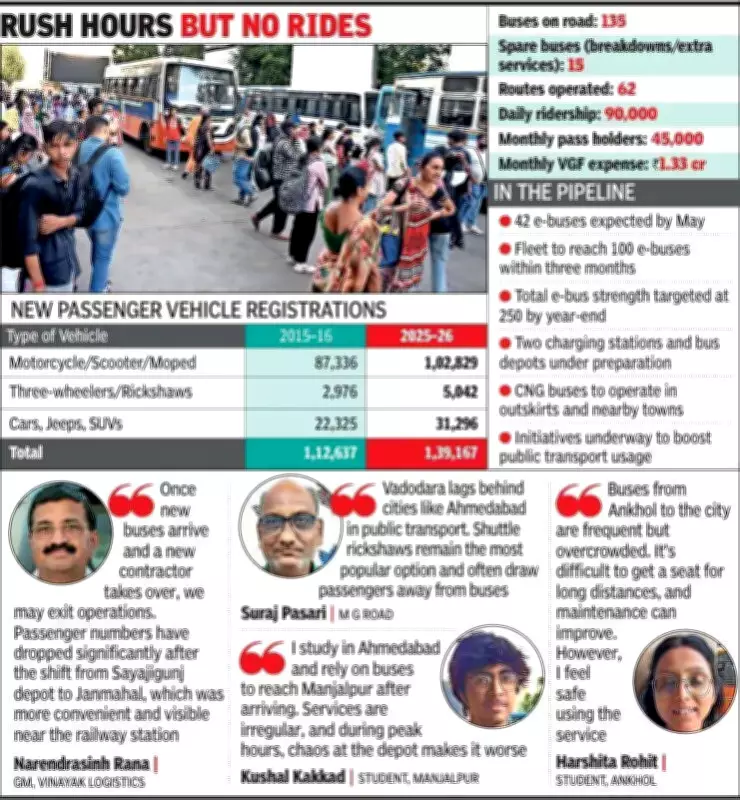
The situation highlights the limitations of the city's bus service, which has seen little improvement over the years. Although seven e-buses were inducted on April 23, officials say it may take several months before any visible improvement is felt. In the meantime, the existing system continues to operate in its current form.

The Vadodara Municipal Corporation (VMC) is now banking on the induction of 100 new e-buses to improve urban mobility. These buses are expected to operate on city routes, while existing CNG buses will serve peripheral areas, said VMC executive engineer (mechanical) Dharmesh Rana.
Hub-and-Spoke Model Limitations
Currently, Janmahal is the only operational city bus depot, after the earlier facility at Sayajigunj was shifted. In the absence of satellite depots, the service follows a hub-and-spoke model, limiting connectivity. Despite the development of ring roads, buses do not operate extensively on these routes.
Overcrowding and Poor Infrastructure
Commuters also face overcrowding during peak hours, making boarding a challenge. Residents say several bus stops, particularly in the old city, are poorly maintained or encroached upon. While routes have been extended to cover expanding areas, the fleet size has remained unchanged, affecting both frequency and punctuality.
Longer routes with more stops have led to frequent delays, prompting many residents to turn to alternative modes of transport. Shared autos have become a preferred low-cost option, while those who can afford it opt for two-wheelers.
Rising Vehicle Population
Data analyzed by VMC for its parking policy shows that the city's vehicle population is increasing by around 8.5% annually. Two-wheelers account for 76% of vehicles, followed by cars at 16% and three-wheelers at 3%.
VMC Measures and Operator Issues
The civic body has taken measures to sustain the service, including providing viability gap funding. The city bus service, earlier operated by Gujarat State Road Transport Corporation (GSRTC), was taken over by VMC in 2008 and later outsourced. Since 2017, it has been operated under the Smart City initiative by a private contractor, Vinayak Logistics, which currently has an extension until June and has indicated plans to exit operations.