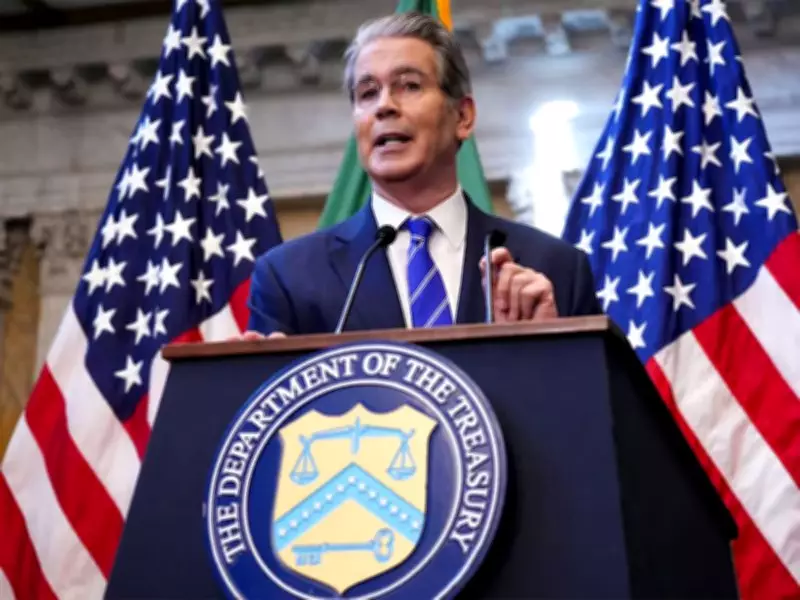
US Treasury Secretary Scott Bessent launched a blistering attack on Iranian leadership, describing them as 'rats in a sewer pipe' and asserting that the global community has united against Tehran's regime. In a strongly worded statement, Bessent condemned Iran's destabilizing activities across the Middle East and its support for militant groups, emphasizing that the United States and its allies are committed to holding the Iranian government accountable.
Bessent's Remarks
Speaking at a press conference, Bessent did not mince words when addressing Iran's leadership. 'The Iranian regime operates like rats in a sewer pipe, undermining stability and spreading chaos,' he said. 'The world has turned against Tehran. No longer will the international community tolerate their nuclear ambitions, human rights abuses, and sponsorship of terrorism.'
Global Isolation
Bessent highlighted that Iran's aggressive policies have led to its increasing isolation. 'Countries that once engaged with Iran are now distancing themselves,' he noted. 'The global consensus is clear: Iran must change its behavior or face continued economic pressure and diplomatic consequences.'

The Treasury chief also reiterated the US commitment to enforcing sanctions and disrupting Iran's revenue streams, particularly those funding proxy groups and weapons programs. 'We will continue to target those who enable the regime's malign activities,' Bessent warned.
Reactions and Implications
Bessent's comments come amid heightened tensions between Washington and Tehran. Iran has faced severe economic sanctions under the Trump administration's 'maximum pressure' campaign, which has been maintained by the Biden administration despite diplomatic overtures. The remarks are likely to further strain relations, with Iranian officials expected to respond sharply.
Analysts suggest that Bessent's harsh rhetoric signals a hardening of the US stance, potentially complicating any future negotiations on the nuclear deal. 'The administration seems to be doubling down on its approach,' said a Middle East policy expert. 'This could push Iran further into defiance or force it to the negotiating table.'
Meanwhile, international reactions have been mixed. Some European allies have expressed support for the US position, while others have called for renewed dialogue to prevent escalation. Russia and China, both close partners of Iran, have criticized the US approach, arguing that sanctions and threats are counterproductive.
Humanitarian Concerns
Bessent also addressed concerns over the humanitarian impact of sanctions, insisting that the US is working to ensure that food and medicine reach the Iranian people. 'Our sanctions are targeted at the regime, not the people,' he stated. 'We have mechanisms in place to facilitate humanitarian trade, and we urge Iran to use its resources for the welfare of its citizens rather than for military adventurism.'
Human rights groups, however, have raised alarms about the collateral damage of sanctions, with reports of shortages of essential medicines and rising poverty in Iran. The Treasury Department has defended its policies, stating that exceptions for humanitarian goods are clear and that the regime is responsible for mismanagement.
Conclusion
Scott Bessent's incendiary remarks underscore the deep animosity between the US and Iran, with no immediate signs of détente. As the world watches, the path forward remains uncertain, with both sides entrenched in their positions. The coming weeks may see further diplomatic maneuvers or increased tensions as each side seeks to advance its interests.