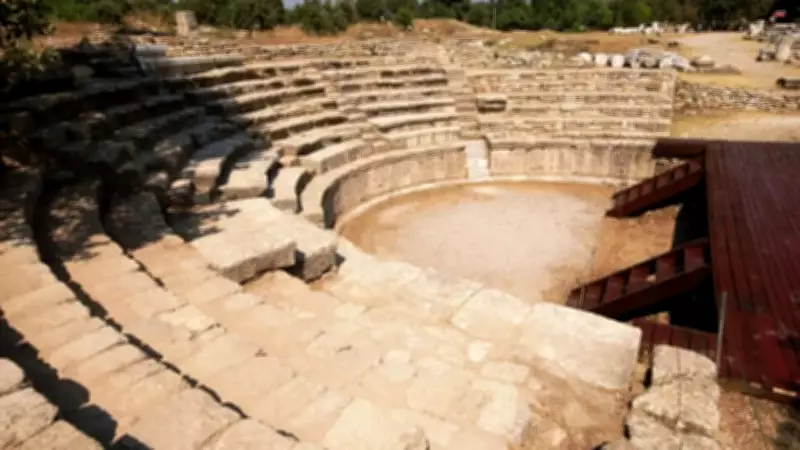
The landscape around Troy does not immediately suggest a single ancient city preserved in isolation. The ground rises gradually at Hisarlık, a mound shaped less by nature than by repeated human occupation. Stone walls appear beside broken foundations from entirely different eras. Sections of the Earth contain traces of settlements separated by centuries. What survives there today is the result of continuous rebuilding across a long stretch of history rather than the remains of one civilisation frozen in time.
Over 4,000 Years of Occupation
The archaeological site represents more than 4,000 years of occupation. The mound preserves evidence of several major settlement phases layered above one another, forming an unusually dense historical record in north-western Türkiye near the Dardanelles.
How Troy Became a Layered Site
Troy expanded through accumulation. Earlier settlements did not disappear completely when later communities arrived. Structures collapsed, walls were buried, fires left debris behind, and new buildings gradually rose above the remains. Over generations, the ground level itself increased, turning the settlement into a layered mound.

According to reports by UNESCO World Heritage, the site contains several layers of settlements, each reflecting a different historical phase. Earlier structures became buried beneath later construction as houses, walls and public spaces were altered over time. Some layers reveal fortified sections with defensive walls, while others preserve traces of domestic life and changing urban layouts. The impression left by the site is uneven. One section may belong to a Bronze Age settlement while nearby remains point to a much later period. Time sits compressed within the same landscape.
Strategic Location Sustained Troy
The position of Troy explains part of its longevity. The settlement stood close to routes connecting the Aegean with inland regions and waterways surrounding the Dardanelles. Movement through this area carried commercial and military importance for centuries.
According to UNESCO reports, the site occupied a position with control of the Dardanelles, helping explain why settlement continued there across different civilisations and historical periods. Even after decline or destruction, the geography itself remained useful enough for later populations to return. The continuity is visible archaeologically. Instead of one isolated historical moment, Troy developed through cycles of reconstruction shaped by changing societies and regional influence.
Centuries of Changing Civilisations
Public attention often centres on the association between Troy and ancient epic tradition, particularly the stories linked to Homer. Yet the archaeological significance of the site extends far beyond literary interpretation.
As reported, Troy has considerable scientific importance because of the long cultural sequence preserved within the mound. The remains provide evidence for changing settlement patterns, architectural styles and forms of urban organisation across thousands of years. Some layers suggest periods of prosperity and expansion. Others indicate destruction followed by rebuilding. The transitions are not always clean or easily separated. That complexity is part of what makes the site distinctive.
Walls Reveal a City Rebuilt Across Generations
The visible ruins at Troy represent only part of the settlement's history. Much of its importance lies beneath the surface, where successive occupations accumulated over time. Each generation altered the site slightly, leaving fragments that later became buried beneath fresh construction.
According to the UNESCO report, the remains at Troy document continuous habitation across multiple periods. Walls from different centuries now stand close together because later settlements reused and built above earlier foundations rather than clearing them away entirely. The site today reflects that long continuity. Walls from different centuries stand close together, sometimes overlapping, sometimes separated only by thin layers of earth. The result is less like a single ruined city and more like a stacked history of human settlement gradually built into the landscape itself.

About the Author
TOI World Desk: At TOI World Desk, our dedicated team of seasoned journalists and passionate writers tirelessly sifts through the vast tapestry of global events to bring you the latest news and diverse perspectives round the clock. With an unwavering commitment to accuracy, depth, and timeliness, we strive to keep you informed about the ever-evolving world, delivering a nuanced understanding of international affairs to our readers. Join us on a journey across continents as we unravel the stories that shape our interconnected world.