

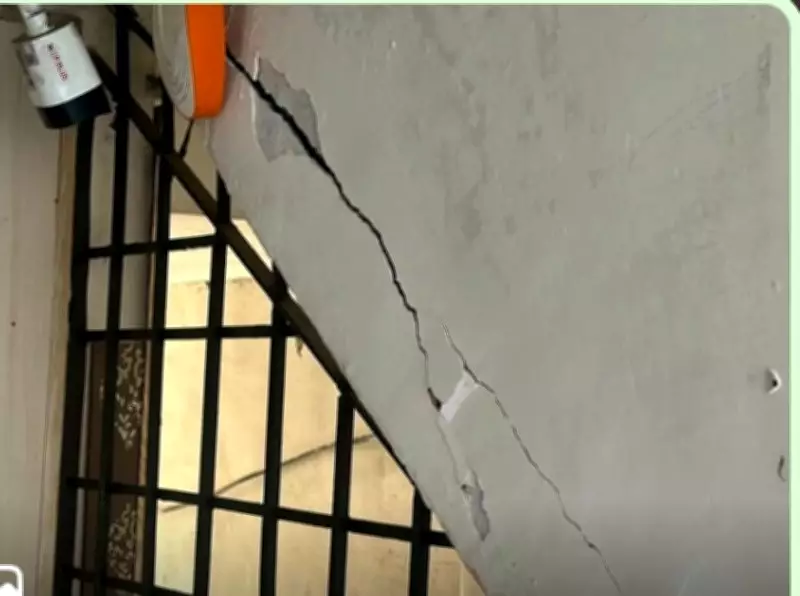
Geologists have attributed the magnitude 5.0 earthquake that jolted large parts of Himachal Pradesh on Friday night to a transferring fault feature, a tectonic phenomenon generally considered less destructive than a major fault rupture. However, experts have warned that the tremor should not lead to complacency as the Kangra region remains highly vulnerable to a major earthquake in the future.
Earthquake Details and Aftershocks
The earthquake struck at 10:04 pm on Friday with its epicentre in the Dhauladhar mountains in the Chamba region at a shallow depth of 5 km. Strong tremors were felt across Kangra, Chamba, Hamirpur, Mandi, Una and adjoining districts, sending residents rushing out of their homes and buildings in panic. The main quake was followed by a series of mild aftershocks. According to National Centre for Seismology data, tremors measuring 2.8 and 3.0 on the Richter scale were recorded at 11:03 pm and 11:52 pm on Friday. Seismic activity continued on Saturday when two more mild shocks of magnitude 2.1 and 2.3 were recorded at 11:55 am and 11:59 am respectively. The aftershocks occurred at depths ranging between 2.1 km and 10 km with their epicentres located close to that of the main earthquake.
Geological Explanation
Prof Ambrish Kumar Mahajan, head of the Department of Geology at the Central University of Himachal Pradesh (CUHP), Dharamsala, said the earthquake sequence appears to be linked to a transferring fault feature that facilitates stress adjustment between larger fault systems. “The vibration pattern observed during the earthquake suggests that the seismic waves were not horizontal and did not spread in a wider area. This indicates it to be a transferring fault feature rather than a major fault rupture. Such fault-transfer mechanisms generally release accumulated tectonic stress through moderate earthquakes and are comparatively less harmful,” Mahajan said. He explained that the aftershocks recorded after the main event were a normal geological response as the crust adjusted to the stress released by the earthquake.

Warning and Preparedness
At the same time, Mahajan cautioned that the moderate nature of the latest tremors should not be interpreted as a reduction in seismic risk. Kangra falls in the highest earthquake hazard category in India. “We can’t predict or stop an earthquake but surely can mitigate its effect. Therefore, strict adherence to earthquake-resistant construction practices is essential,” he said. Mahajan stressed that all new constructions should comply with seismic safety standards and older buildings should undergo structural audits. He said the latest earthquake sequence serves as a reminder that the Himalayan region remains tectonically active and that preparedness is the best defence against a future high-intensity earthquake.






