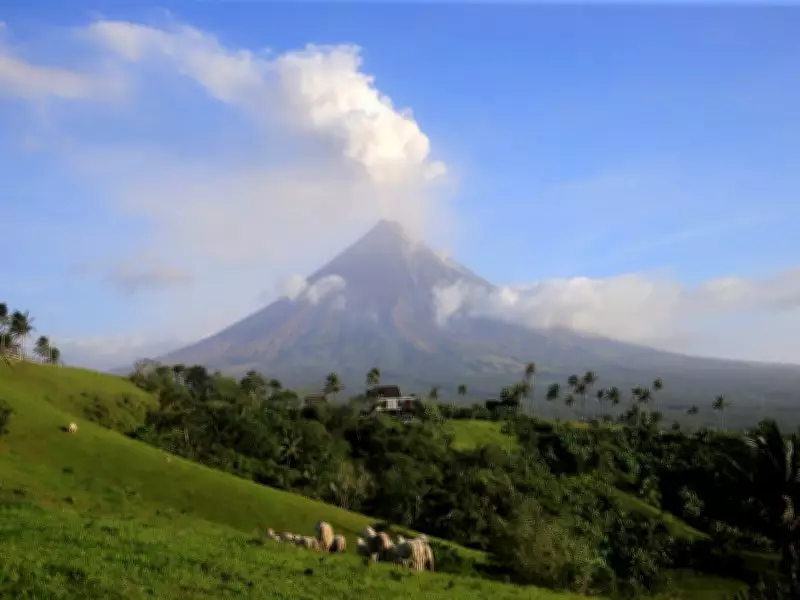
Thousands of residents have been evacuated from villages surrounding the Mayon Volcano in the Philippines after it began erupting, sending ash and lava into the sky. The Philippine Institute of Volcanology and Seismology (PHIVOLCS) raised the alert level to 3, indicating a relatively high level of volcanic unrest and a potential for hazardous eruption within weeks or even days.
Eruption Details
The volcano, located in Albay province about 330 kilometers southeast of the capital Manila, started spewing lava fountains up to 700 meters high on Sunday evening. Ash plumes reached up to 2 kilometers above the crater, blanketing nearby towns with fine gray ash. The eruption was preceded by increased seismic activity and ground deformation over the past weeks.
Evacuation Efforts
Authorities ordered the evacuation of over 12,000 families, or roughly 60,000 people, from the 6-kilometer permanent danger zone around the volcano. Evacuation centers have been set up in schools and gymnasiums, with relief goods and medical teams on standby. The Philippine Coast Guard also suspended sea travel in the area due to the risk of ashfall affecting visibility and engine operations.

Impact on Communities
Local officials reported that ashfall has affected several barangays, causing respiratory issues among residents. Farmers are concerned about potential damage to crops and livestock. The Albay provincial government has declared a state of calamity to access emergency funds. Flights at nearby Legazpi Airport were temporarily suspended due to ash clouds, but operations have since resumed.
Historical Context
Mayon, known for its perfect cone shape, is the most active volcano in the Philippines, having erupted over 50 times in the past 500 years. Its most destructive eruption occurred in 1814, which buried the town of Cagsawa and killed over 1,200 people. The last major eruption was in 2018, which forced the evacuation of tens of thousands and caused significant damage.
Ongoing Monitoring
PHIVOLCS continues to monitor the volcano closely, warning that further eruptions could occur with little notice. They advise the public to stay clear of the danger zone and to prepare for possible lahar flows during heavy rains. The agency has also warned of potential ashfall in surrounding provinces depending on wind direction.