Taiwan Monitors PLA Military Movements Near Its Territory
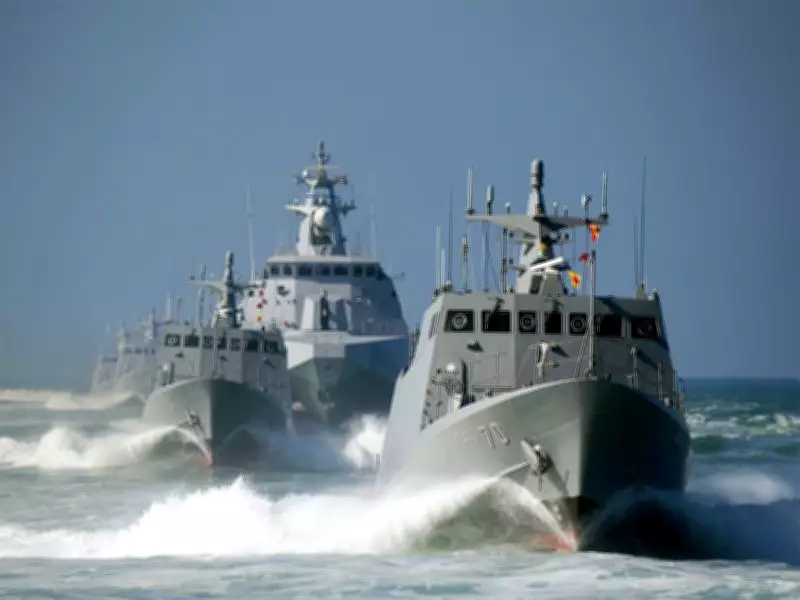
Taiwan's Ministry of National Defence (MND) has reported significant military activity by China's People's Liberation Army (PLA) around its territory. On Saturday, March 21, 2026, the MND detected two sorties by PLA aircraft and eight vessels from the People's Liberation Army Navy (PLAN) operating in the vicinity of Taiwan.
Details of the Recent Incursions
According to a post on X (formerly Twitter), the MND shared that one of the two PLA aircraft sorties crossed the median line and entered Taiwan's eastern part of the Air Defense Identification Zone (ADIZ). The ministry stated, "2 sorties of PLA aircraft and 8 PLAN vessels operating around Taiwan detected up until 6 a.m. (UTC+8) today. 1 out of 2 sorties crossed the median line and entered Taiwan's eastern part ADIZ. We have monitored the situation and responded." This incident highlights ongoing tensions in the region, with Taiwan actively monitoring and responding to such movements to ensure its security.
Historical Context of Military Activities
This latest report follows a pattern of increased PLA activity around Taiwan. On the previous day, Friday, the MND recorded the presence of six PLA aircraft and eight PLAN vessels. Earlier, on Thursday, the ministry noted even larger numbers, with 12 PLA aircraft, nine PLAN vessels, and two official ships operating near Taiwan's territory. These consistent incursions underscore the persistent military pressure exerted by China, which claims Taiwan as an inseparable part of its territory.

Background on the Taiwan-China Dispute
The dispute over Taiwan's status is deeply rooted in historical and political complexities. China asserts that Taiwan is an integral part of its territory, a stance embedded in national policy and supported by domestic laws and international statements. However, Taiwan operates as a de facto independent state with its own government, military, and economy, maintaining a distinct identity. According to the United Service Institution of India, Taiwan's status remains a significant point of international debate, testing principles such as sovereignty, self-determination, and non-interference in international law.
Historical Origins of the Conflict
The historical claims date back to the Qing Dynasty's annexation of Taiwan in 1683 after defeating Ming loyalist Koxinga. However, Taiwan remained under limited Qing control until 1895, when it was ceded to Japan following the First Sino-Japanese War, becoming a Japanese colony for 50 years. After World War II, Taiwan was returned to Chinese control, but the sovereignty transfer was not formalized. In 1949, the Chinese Civil War led to the establishment of the People's Republic of China (PRC) on the mainland, while the Republic of China (ROC) retreated to Taiwan, asserting its claim to govern all of China. This resulted in dual sovereignty claims, with Taiwan avoiding a formal declaration of independence to prevent military conflict with the PRC, as noted by the United Service Institution of India.
The ongoing military activities by the PLA around Taiwan reflect the unresolved tensions in this geopolitical hotspot, with both sides maintaining vigilant postures amid the complex historical and political backdrop.