

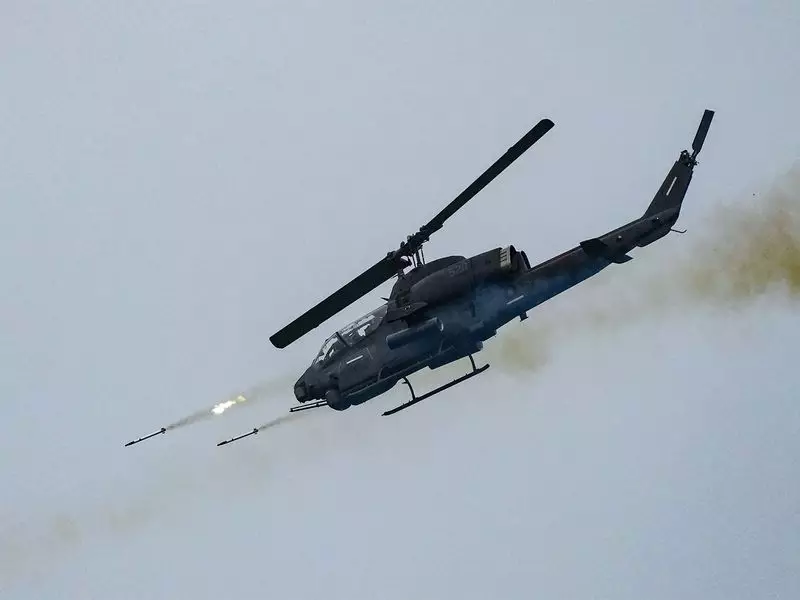
Taiwan's military forces have reported a significant presence of Chinese military assets in the vicinity of the island, marking another day of heightened activity in the sensitive Taiwan Strait. The Ministry of National Defence (MND) in Taipei announced that it had detected multiple sorties by People's Liberation Army (PLA) aircraft and the movement of naval ships close to its territory.
Details of the Military Movements
According to the official statement released on Sunday, four Chinese military aircraft were observed operating around Taiwan during a 24-hour monitoring period ending at 6 am local time. Alongside the aerial activity, six People's Liberation Army Navy (PLAN) vessels were also detected in the same timeframe.
The Taiwanese defence ministry clarified that its own armed forces were closely watching the situation. They employed a combination of land-based missile systems, naval assets, and combat air patrols to monitor the PLA's movements and to ensure a ready defensive posture. The ministry's standard protocol is to track such incursions and issue public alerts to keep the island's citizens informed.

Context of Rising Tensions
This latest incident is not an isolated event but part of a persistent pattern of increased military pressure from Beijing. China, which claims Taiwan as its own territory despite the island's self-governance, has significantly ramped up such manoeuvres in recent years. These activities are often seen as demonstrations of strength and as a method of asserting China's territorial claims.
The Taiwanese government has consistently responded to these actions by reaffirming its commitment to defend its sovereignty and by urging Beijing to cease actions that destabilise the region. The frequent transit of warships and flights through the Taiwan Strait, a crucial international waterway, raises concerns about the potential for miscalculation and accidental conflict.
Regional and Global Implications
The regular appearance of Chinese military forces around Taiwan has major implications for regional security in the Indo-Pacific. Neighbouring countries, including Japan and the Philippines, monitor these developments closely due to their own strategic interests and territorial disputes with China in the South China Sea.
Globally, major powers like the United States have reiterated their commitment to peace and stability in the Taiwan Strait under the Taiwan Relations Act. The U.S. continues to conduct freedom of navigation operations and maintains arms sales to Taiwan, actions that consistently draw strong condemnation from Beijing. This dynamic creates a complex geopolitical flashpoint where any escalation could have widespread consequences.
Ongoing Vigilance and Response
Taiwan's defence establishment remains on high alert. The public disclosure of these incidents by the MND serves a dual purpose: it demonstrates transparency to the Taiwanese public and the international community, and it signals to Beijing that its movements are being watched and recorded.
The core of the dispute remains unresolved. China insists on eventual "reunification," by force if necessary, while Taiwan's leadership maintains that only its people can decide their future. As long as this fundamental disagreement persists, military posturing and surveillance activities in and around the Taiwan Strait are likely to continue, keeping the region on edge.
Analysts suggest that these calibrated shows of force are part of China's broader strategy to normalise its military presence near Taiwan and to test the responses of both Taipei and its international partners. The situation underscores the fragile peace in one of the world's most critical geopolitical hotspots.






