Taiwan Reports Significant Chinese Military Presence Near Its Territory
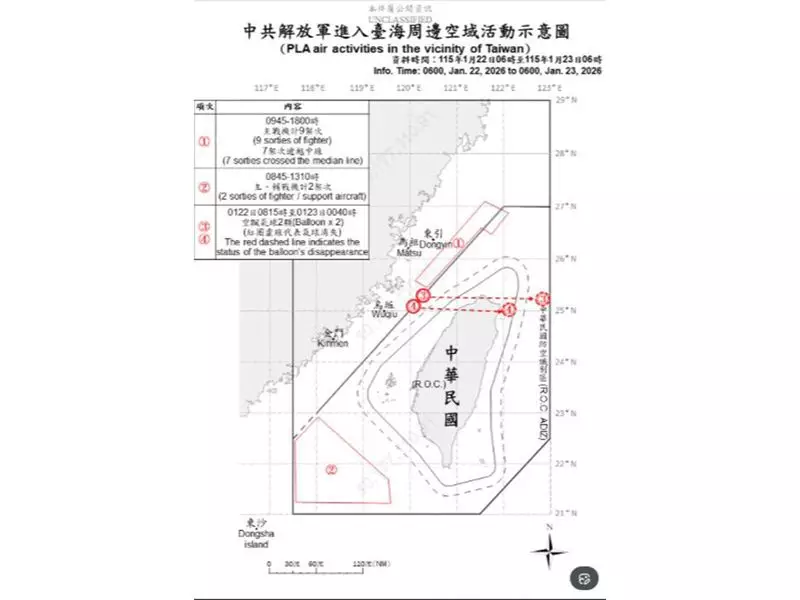
In a development that underscores the persistent military tensions in the Asia-Pacific region, Taiwan's Ministry of National Defence has announced the detection of multiple Chinese military assets operating in proximity to its territory. According to the latest reports, Taiwanese authorities tracked a total of 11 People's Liberation Army (PLA) aircraft and 5 naval vessels conducting sorties and maneuvers around the island.
Details of the Military Activity
The detected aircraft and vessels were observed over a specific period, though exact timings and locations have not been fully disclosed by Taiwanese officials. This incident is part of a broader pattern of increased Chinese military activity near Taiwan, which has been a focal point of geopolitical friction. The PLA's operations often involve:
- Aerial sorties by fighter jets and surveillance planes.
- Naval patrols by destroyers, frigates, and other vessels.
- Exercises that test Taiwan's air defence and maritime monitoring capabilities.
Taiwan's defence forces responded by deploying its own assets to monitor the situation closely, ensuring national security without escalating the confrontation. The ministry emphasized that such activities are routinely tracked and reported to maintain transparency and alert the public.
Context and Regional Implications
This latest detection comes amid ongoing diplomatic and military tensions between Taiwan and China. China claims Taiwan as part of its territory and has not ruled out the use of force to achieve reunification. In response, Taiwan has bolstered its defence posture with support from allies like the United States. The increased PLA presence is seen as a demonstration of China's military might and a signal to Taiwan and its international partners.
Regional analysts note that such incidents contribute to the volatility in the Taiwan Strait, a critical waterway for global trade. The strategic importance of this area means that any military escalation could have far-reaching consequences for:
- Regional stability in Asia-Pacific.
- International shipping and trade routes.
- Diplomatic relations between major powers, including the U.S. and China.
Taiwan's government has reiterated its commitment to peace and stability, calling for dialogue to resolve differences. However, with no signs of abatement in Chinese military activities, the situation remains a key concern for security experts worldwide.
Broader Trends in Chinese Military Operations
Over recent years, China has significantly increased its military exercises around Taiwan, often citing them as routine training. These operations serve multiple purposes:
- Asserting sovereignty claims over Taiwan.
- Testing Taiwan's and allied responses.
- Showcasing advancements in PLA capabilities, including in aviation and naval domains.
The detection of 11 aircraft and 5 vessels aligns with this trend, highlighting the PLA's growing proficiency in combined arms operations. As Taiwan continues to enhance its surveillance and defence systems, such incidents are likely to remain a regular feature of the regional security landscape.
In summary, Taiwan's latest report on PLA activity underscores the ongoing military tensions in the Taiwan Strait. With both sides maintaining vigilant postures, the international community watches closely, hoping for peaceful resolutions amid these complex geopolitical dynamics.