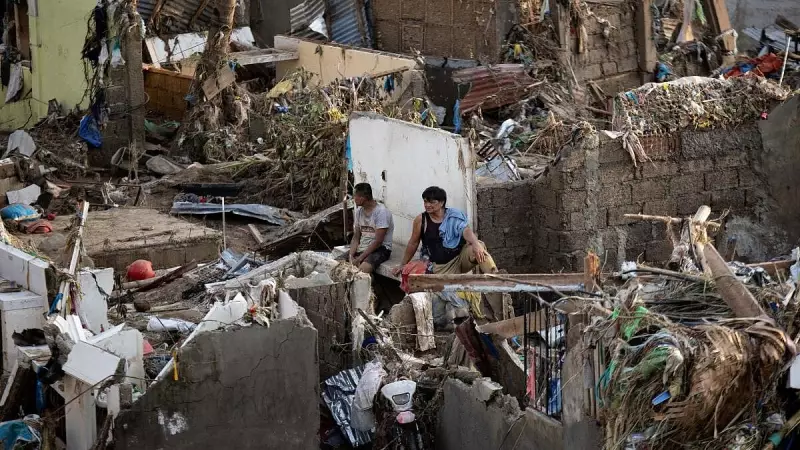
The Philippines has launched one of its largest emergency operations this year as Super Typhoon Fung Wong intensified dramatically, forcing the evacuation of approximately 100,000 people across multiple regions. The powerful storm system has already caused widespread disruption, leading to the cancellation of nearly 300 flights and putting millions of residents on high alert.
Mass Evacuation and Flight Chaos
Authorities in the Philippines have been working tirelessly to move residents away from coastal and low-lying areas as the typhoon gained strength. More than 100,000 people have been relocated to safer ground, with evacuation centers being set up in schools and government buildings across affected regions. The massive relocation effort represents one of the most significant disaster preparedness actions taken by the government in recent months.
The air travel sector has been severely impacted, with approximately 300 flights cancelled across multiple airports. Both domestic and international routes have been affected, leaving thousands of passengers stranded. Major airlines have issued travel advisories, urging passengers to check flight status before heading to airports and offering rebooking options without additional charges.
Rapid Intensification and Emergency Response
What began as a tropical storm quickly escalated into a super typhoon, catching many by surprise with its rapid intensification. Meteorologists have been monitoring the system closely as it developed into a major weather threat. The Philippine Atmospheric, Geophysical and Astronomical Services Administration (PAGASA) has issued the highest level weather warnings for several regions.
Emergency response teams have been deployed across the most vulnerable areas, with rescue personnel and equipment positioned strategically. The National Disaster Risk Reduction and Management Council has been coordinating with local government units to ensure swift response to any emergencies that may arise during the typhoon's passage.
Regional Impact and Preparedness Measures
The super typhoon's path is expected to affect multiple regions, with heavy rainfall, strong winds, and potential storm surges predicted. Coastal communities have been particularly advised to take precautions against possible flooding and landslides. Fisherfolk and those living in makeshift housing near shorelines have been prioritized in evacuation efforts.
Local governments have implemented several preparedness measures including:
- Preemptive power shutdowns in high-risk areas
- Stockpiling of emergency supplies and food packs
- Activation of emergency operation centers
- Deployment of mobile hospitals and medical teams
- Suspension of classes in affected regions
The weather disturbance comes as the Philippines continues to enhance its disaster response capabilities following previous devastating typhoons. The country experiences an average of 20 tropical cyclones annually, making it one of the most storm-prone nations in the world.
International weather monitoring agencies are closely tracking Super Typhoon Fung Wong's development and potential impact on neighboring countries. The rapid intensification serves as a reminder of the increasing frequency of extreme weather events in the region, possibly linked to climate change patterns affecting Southeast Asia.