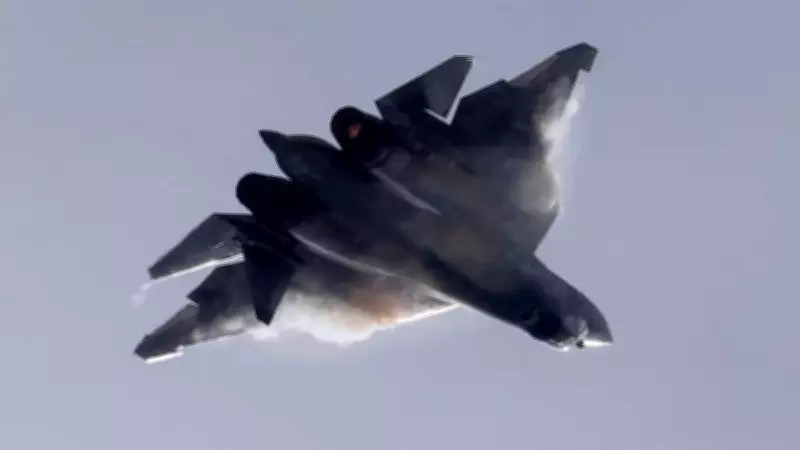
A Sukhoi fighter jet successfully landed at Navi Mumbai International Airport, in a demonstration of the airport's capability to support military operations during emergencies, disaster relief missions, and national security contingencies. The event underscores a concept increasingly incorporated into aviation planning worldwide: the dual-use of civilian airports for military purposes.
Strategic Significance of the Landing
The landing of the Sukhoi, a frontline combat aircraft of the Indian Air Force, at a civilian airport highlights the growing synergy between civil and military aviation. This capability is crucial for rapid response during crises, such as natural disasters or security threats, where military aircraft may need to operate from civilian infrastructure. Navi Mumbai International Airport, which is still under development, has been designed with features that can accommodate military aircraft, including reinforced runways and specialized parking areas.
Implications for National Security
The ability to use civilian airports for military operations enhances the operational flexibility of the armed forces. In the event of a conflict or emergency, military aircraft can be dispersed to multiple civilian airports, reducing vulnerability to attacks on primary airbases. This concept, known as 'dispersed basing,' is a key strategy in modern air power doctrine. The Sukhoi landing at Navi Mumbai is a practical demonstration of this strategy in action.

Global Trends in Dual-Use Aviation
Countries around the world are increasingly integrating military and civilian aviation infrastructure. For example, in the United States, civilian airports are regularly used by the Air National Guard. Similarly, European nations have agreements allowing military aircraft to use civilian airports during exercises or emergencies. India's move aligns with this global trend, leveraging its expanding civilian airport network to bolster national security.
Technical and Logistical Aspects
The Sukhoi SU-30MKI, a twin-engine, multirole fighter, requires a runway length of at least 2,500 meters for landing. Navi Mumbai International Airport's runway, which is 3,700 meters long, is well-suited to handle such aircraft. The landing was coordinated with the Airports Authority of India and the Indian Air Force, ensuring all safety protocols were followed. Temporary airspace restrictions were put in place to facilitate the operation.
Future Prospects
This successful landing paves the way for more frequent military-civilian cooperation at Indian airports. It is expected that other major civilian airports, such as those in Delhi, Mumbai, and Bengaluru, will also be integrated into military contingency plans. The development of dedicated facilities at civilian airports for military use, such as hardened shelters and fuel depots, could further enhance this capability.
Conclusion
The Sukhoi fighter jet landing at Navi Mumbai International Airport is a landmark event that showcases the dual-use potential of India's aviation infrastructure. It not only demonstrates the airport's readiness to support national security operations but also highlights a strategic shift towards integrated civil-military aviation planning. As India continues to modernize its airport network, such capabilities will become increasingly important for both disaster response and defense.