Kolkata's vital Blue Line metro corridor was thrown into disarray once again on Monday evening after a commuter attempted suicide by jumping onto the tracks at Maidan station. This marked the second such incident within a span of just four days, bringing services along the busy south-central axis, which includes the Central Business District (CBD), to a grinding halt during the crucial evening rush hour.
Incident Details and Immediate Response
The distressing event occurred at 5:58 pm when the passenger jumped in front of a Dakshineswar-bound train. In a swift response to rescue the individual, Metro Railway authorities immediately switched off the power to the third line. A spokesperson for the Metro Railway confirmed the details, stating that full services across the entire Blue Line were eventually restored by 6:46 pm, after a disruption lasting 48 minutes.
However, the restoration was not instantaneous across the entire stretch. While truncated services managed to operate on the Central-Dakshineswar and Mahanayak Uttam Kumar (Tollygunge)-Shahid Khudiram sections, the crucial link between Tollygunge and Central stations remained completely suspended. In total, the disruption impacted 11 stations, severely affecting the flow of commuters moving both north and south.

Commuters Face Harrowing Evening Ordeal
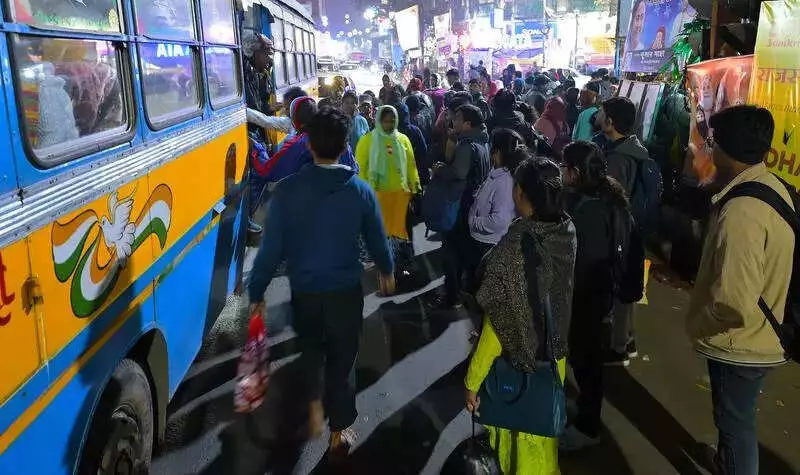
The timing of the incident could not have been worse, coinciding with the peak evening commute. Thousands of homebound passengers were left stranded and scrambling for alternatives. The situation on the roads was already congested, leading to a perfect storm of transport woes.
Arnab Sengupta, an executive and daily metro commuter, shared his ordeal. "App cab fares were already soaring due to traffic snarls. They hit the roof after this suicide bid crippled metro stations across the city's main areas," he said. Sengupta, who works in Esplanade, reported paying a hefty Rs 650 to travel to his home in Kudghat, as the few available buses were severely overcrowded.
Cascading Delays and Overcrowding Persist
Even after services officially resumed at 6:46 pm, the ripple effects of the nearly hour-long shutdown were felt for much longer. Trains remained dangerously overcrowded as the system tried to clear the massive backlog of stranded passengers.
Sasanko Das, a 45-year-old commuter, experienced these delays firsthand. He boarded a train from Baranagar at 6:12 pm, expecting a 15-minute journey to Esplanade. "Today, it took more than 45 minutes," he recounted, highlighting the extended period of disruption that followed the initial halt. The incident underscores the vulnerability of the city's metro network, a lifeline for millions, to such tragic events and the widespread chaos they trigger.