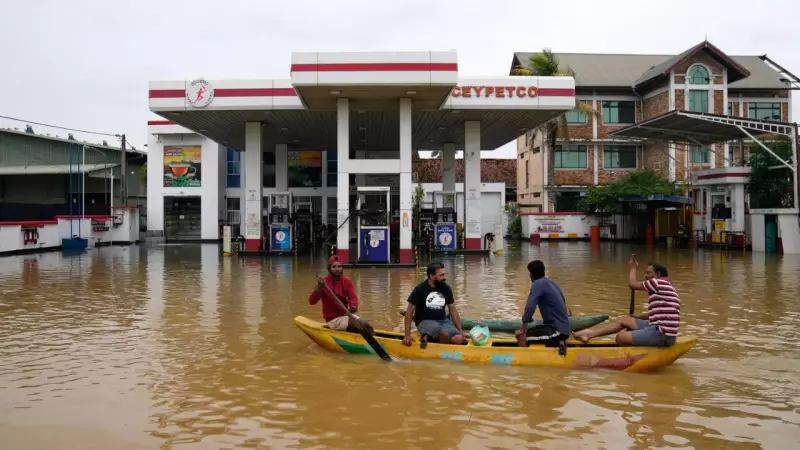
Sri Lanka has declared a nationwide state of emergency following the devastating impact of Cyclone Ditwah, which has claimed 132 lives and left 176 people missing across the island nation. The extreme weather system has triggered massive flooding and landslides, creating one of the worst natural disasters to hit the country in recent years.
Widespread Destruction and Emergency Response
President Anura Kumara Dissanayake invoked emergency laws on Saturday, granting him broad powers to coordinate disaster response efforts. The decision came as torrential rains continued to batter various parts of the country for an entire week, overwhelming infrastructure and emergency services.
The Disaster Management Centre (DMC) reported staggering numbers that highlight the scale of the catastrophe. More than 15,000 homes have been completely destroyed by the cyclone's fury, displacing thousands of families from their residences. According to official figures, approximately 78,000 people have been forced to seek shelter in government-run temporary facilities.

DMC Director-General Sampath Kotuwegoda confirmed the grim statistics, stating "We have 132 confirmed dead and another 176 missing" as rescue operations continued across affected regions. The military has been fully mobilized, with army, navy, and air force personnel deployed to reinforce relief operations in the hardest-hit areas.
Ongoing Threats and Evacuation Efforts
Although Cyclone Ditwah began moving north toward India on Saturday, the danger persisted in Sri Lanka. Fresh landslides struck the central district of Kandy, located approximately 115 kilometers east of Colombo, submerging several critical sections of the main access road and hampering relief efforts.
Flooding intensified in low-lying regions, particularly along the Kelani River that flows from Colombo into the Indian Ocean. Authorities issued mandatory evacuation orders for residents living near the riverbanks as water levels continued to rise dangerously.
While rainfall showed signs of easing in most parts of the country, including the capital Colombo, northern regions continued to experience heavy showers due to the lingering effects of the cyclone system. Meteorological departments warned that although the immediate threat was diminishing, the aftermath would continue to pose significant challenges.
International Response and Indian Assistance
The Sri Lankan government has made an urgent appeal for international assistance to cope with the unprecedented disaster. Officials specifically requested Sri Lankans living abroad to contribute cash donations to support relief efforts for nearly half a million people affected by the cyclone.
India responded with immediate assistance, demonstrating the strong bilateral ties between the neighboring nations. Two Indian Air Force planes loaded with essential relief supplies were dispatched to Sri Lanka, while an Indian warship already docked in Colombo for a goodwill visit donated its entire ration stocks to support victims.
Prime Minister Narendra Modi expressed solidarity with Sri Lanka through a post on social media platform X. He conveyed his heartfelt condolences to the people of Sri Lanka and reaffirmed India's commitment to supporting its "closest maritime neighbour" during this crisis. The Indian leader highlighted that New Delhi had promptly dispatched relief supplies and critical Humanitarian Assistance and Disaster Relief (HADR) equipment as part of the emergency operation.
This cyclone represents the deadliest natural disaster to strike Sri Lanka since 2017, when massive floods and landslides claimed over 200 lives and displaced hundreds of thousands of people. The current emergency has raised concerns about climate vulnerability and disaster preparedness in the South Asian region.