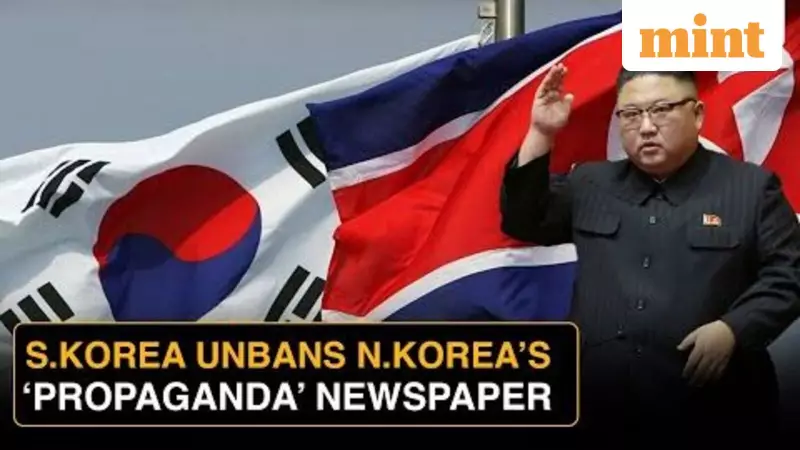
In a landmark decision that marks a significant departure from Cold War-era policies, the South Korean government has officially lifted its long-standing ban on North Korea's state-run newspaper, Rodong Sinmun. This move, announced on 29 December 2025, grants South Korean citizens legal access to what was once strictly controlled material, representing a major shift under the current dovish administration.
End of an Era: Unbanning a Propaganda Tool
The decision effectively dismantles a system of censorship that had been in place for decades, treating publications from the North as special restricted items. The administration, led by a president advocating for engagement, has expressed trust in the public's ability to critically assess the content. This policy reversal is rooted in a belief that open access, rather than prohibition, fosters a more informed citizenry, even when faced with overt propaganda from Pyongyang.
Public Reaction and Critical Concerns
While the move is seen as a progressive step towards fostering inter-Korean dialogue and understanding, it has not been without controversy. Critics have voiced substantial concerns, warning of potential normalization risks. A primary apprehension is the impact on younger generations in the South who have no direct memory of the Korean War. Experts fear that without the historical context lived by their elders, this demographic might be more susceptible to the narratives presented in the North's official mouthpiece.

The debate centers on a fundamental question: does exposure to state-controlled media from an adversarial regime help build resilience and critical thinking, or does it inadvertently legitimize and spread its ideology? The South Korean government's gamble is that its society is now robust enough to handle the latter.
A Step Towards Dialogue or a Risky Gamble?
This policy change is widely interpreted as more than a domestic media regulation update. It is a deliberate diplomatic signal aimed at Pyongyang, suggesting Seoul's willingness to lower barriers and encourage openness. By allowing the flow of official information from the North, however curated, South Korea may be attempting to create a subtle precondition for future talks.
The ultimate consequences remain to be seen. Will this lead to a renewed push for inter-Korean dialogue, or will it deepen societal divisions within the South? The answer likely depends on how the public engages with the newly accessible content and how the North chooses to respond to this unprecedented opening from its southern neighbor.