

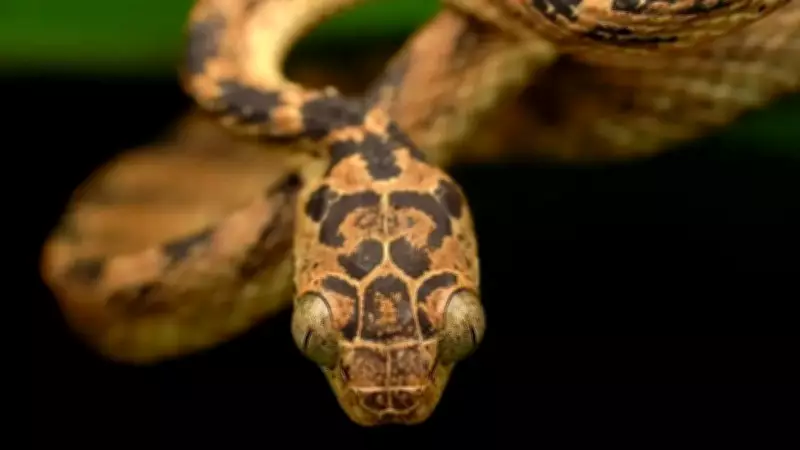
The Western Ghats, a series of green ranges along India's western coast, span Gujarat, Maharashtra, Goa, Karnataka, Kerala, and Tamil Nadu. Recognized as one of the eight hottest biodiversity hotspots globally, these mountains boast rich flora and fauna. Beyond lush forests, hills, streams, and plantations, they harbor a hidden group: snakes. Though feared by many, snakes play a critical ecological role by controlling rodent populations, serving as prey for other predators, and maintaining nature's delicate balance. While some species are venomous and require caution, most are shy and avoid humans.
A Land of Extraordinary Snake Diversity
The Western Ghats are renowned for snake diversity, with at least 90 species, many endemic. Studies by the Indian Institute of Science and environmental organizations highlight the region's reptilian endemics. Among these, venomous snakes stand out.
Venomous Snakes of the Western Ghats
According to a Science Direct study, the King Cobra is one of the most recognizable. Reaching up to 15 feet, it is the world's longest venomous snake. Symbolizing power, it is often called the king of the jungle. Unlike other snakes, it feeds exclusively on snakes. Intelligent and quick, it is an apex predator. Contrary to belief, it does not attack humans and flees when possible.

The Malabar Pit Viper, unique to the Western Ghats, is known for vibrant colors—green, yellow, brown, orange, or red—aiding camouflage on mossy branches or forest floors. Photographers seek it during the rainy season. A 2023 review noted limited knowledge about this species. Related, the Bamboo Pit Viper and Hump-nosed Pit Viper exhibit excellent camouflage. Studies in Goa show pit vipers are habitat-specific and prevalent during monsoons.
The Hump-nosed Pit Viper, small but medically important, is identified by its raised snout. It inhabits leaf litter and underbrush. Though less known than cobras, scientific research highlights the risks of its bites.
Beyond Cobras and Vipers
Not all Western Ghats snakes are venomous. The Green Vine Snake, with its long green body and pointed snout, blends seamlessly with vegetation, appearing like a masterpiece of creation. The Indian Rock Python, a non-venomous constrictor, kills prey by squeezing. It can grow large, swallowing big animals, and is secretive, hiding in grasslands, forests, and wetlands.
Why These Snakes Need Protection
Endemicity is underappreciated. Endemic reptiles like Beddome's Cat Snake and Malabar Pit Viper evolved over millions of years. Their survival depends on local climate; habitat loss threatens their existence. Conservation biologists view snakes as ecosystem health indicators; abundant snakes signify a healthy forest with prey, vegetation, and water. Science Direct reports increasing threats from agriculture, road-building, urbanization, and deforestation. Roadkills are significant, especially in rainy seasons. Climate change alters rainfall and habitat viability. Computer modeling predicts habitat changes for endemic reptiles.
Public perception is another issue. Many harmless snakes are killed out of fear. Experts note that most snake bites occur during attempts to handle, catch, or kill snakes.
Guardians of a Hidden World
While tigers and elephants often represent the Western Ghats, snakes deserve recognition. They are ancient creatures adapted to complex ecosystems. From the intimidating King Cobra to the beautiful Malabar Pit Viper and nearly invisible Green Vine Snake, snakes exemplify the region's magnificence. When thinking of the Western Ghats, remember that beyond greenery and waterfalls lies a secret world shaped by millions of years of evolution.






