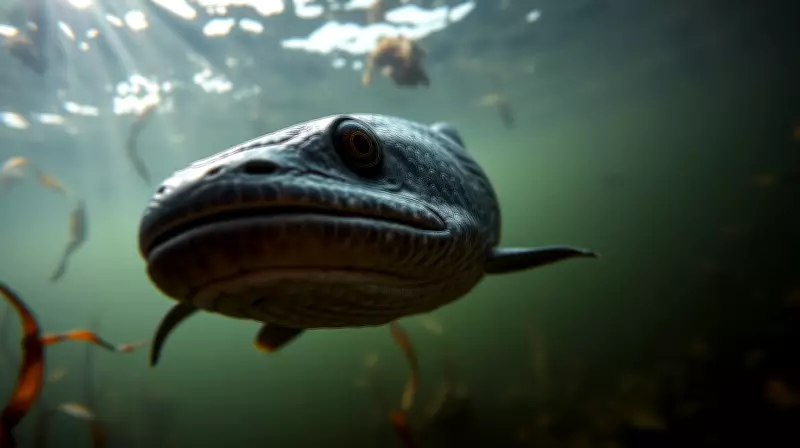
The northern snakehead is a remarkable fish. It breathes air, survives out of water, moves across wet land during heavy rain, guards its eggs aggressively, can spawn up to 50,000 eggs per season, and has no natural predators in North America. This large predatory fish, native to China, Korea, and eastern Russia, was first found in American waters in 2002 in a small Maryland pond, likely released by someone who bought it at a live fish market. In the two decades since, it has established breeding populations across 16 states, spreading through major river systems from Arkansas to New York. A 2025 spatial modeling study has now projected that, at current rates, snakeheads could colonize every suitable habitat in the contiguous United States within 43 years.
What the Northern Snakehead Is and Why It Is So Hard to Stop
The northern snakehead (Channa argus) is a heavily built, sharp-toothed fish that can grow up to three feet long. It belongs to a family whose defining biological trait is the ability to breathe atmospheric oxygen directly. According to the U.S. Fish and Wildlife Service's ecological risk screening, Channa argus is classified as an obligate air breather, meaning it must have access to surface air to survive. That same adaptation allows it to move overland on wet ground during heavy rain, giving it the ability to cross short distances between waterbodies in a way most fish cannot. The FWS rates the species as high risk, noting a well-documented history of invasiveness and a strong climate match across large portions of the continental United States.
How the Snakehead Spread to 16 States After First Appearing in Maryland
Before snakeheads were added to the federal list of injurious wildlife under the Lacey Act in 2002, banning their import and interstate transport without a permit, they were sold openly in live fish markets, pet stores, and some restaurants in major American cities including Boston, New York, and St. Louis. According to USGS's FAQ on snakehead introductions, some of the fish now living in American waterways were almost certainly released by aquarium hobbyists or by people hoping to establish a local food source. Separate introduction events occurred across the country, and genomic analysis published in PeerJ confirmed that the U.S. populations represent at least five genetically distinct groups drawn from different source populations in Asia, meaning the invasion was never a single event but a series of repeated introductions.

What Scientists' Models Predict About the Snakehead's Future Spread
A 2025 analysis published by IntechOpen used a MaxEnt species distribution model built from 27 environmental and climatic variables to predict how far the northern snakehead could ultimately spread across the United States. The results showed a high probability of invasion across the entire eastern seaboard, the Lower Mississippi River Valley, and parts of the Gulf Coast, with particularly vulnerable regions identified as the Ozarks, the Gulf Coast, and the Great Lakes basin. At the modeled average annual expansion rate of more than 11,000 square miles per year, the study projected that snakeheads could reach the full extent of climatically suitable habitat within approximately 43 years, a timeline researchers described as urgently demanding proactive management in high-risk regions before populations become established.
How the Snakehead's Predatory Behavior Threatens Native American Fish
The ecological concern centers on what snakeheads eat and how aggressively they reproduce. A female northern snakehead can spawn multiple times throughout the warm season and may lay as many as 50,000 eggs per clutch, according to Penn State Extension, with adults guarding the young for months afterward, unusually intensive parental behavior for a fish. In terms of diet, a USGS-backed study published in Ecology of Freshwater Fish compared what northern snakeheads eat in the lower Potomac River against the diets of three co-occurring native predators including largemouth bass, finding significant dietary overlap that puts native sport and forage fish under direct competitive and predatory pressure.

What a 2024 Study Found About the Snakehead's Impact on Fish Communities
For years, scientists debated whether snakeheads were truly causing measurable harm to native fish populations or simply coexisting with them. A 2024 study in the Journal of Fish and Wildlife Management provided some of the clearest evidence yet that establishment of northern snakehead does correlate with shifts in native fish community composition, comparing surveys of the Blackwater River drainage in the Chesapeake Bay watershed before and after snakehead populations became established there. Alongside this, new research from the Maryland Department of Natural Resources published in Northeastern Naturalist found that the majority of female snakeheads collected from the upper Chesapeake Bay were carrying eggs in two distinct sizes, strongly suggesting the species can spawn twice per year in American waters, a biological finding that helps explain why populations expand so efficiently once they take hold.
What Authorities Are Doing to Control the Snakehead's Spread
The official response has ranged from public kill orders to experimental name changes. Maryland renamed the northern snakehead the "Chesapeake Channa" in April 2024 specifically to increase public appetite for eating the fish as a control strategy, removing its alarming common name in favor of one that could appear on a restaurant menu. According to the National Invasive Species Information Center, Maryland removed more than 18,000 pounds of invasive fish from the Chesapeake Bay watershed at Conowingo Dam during the 2024 season alone. Across all affected states, the legal position remains consistent: anyone who catches a snakehead is required to kill it immediately and report the catch to their state fish and wildlife authority, since live release is prohibited and every individual left in the water is a potential contributor to a population that scientists now say shows no sign of slowing down.