

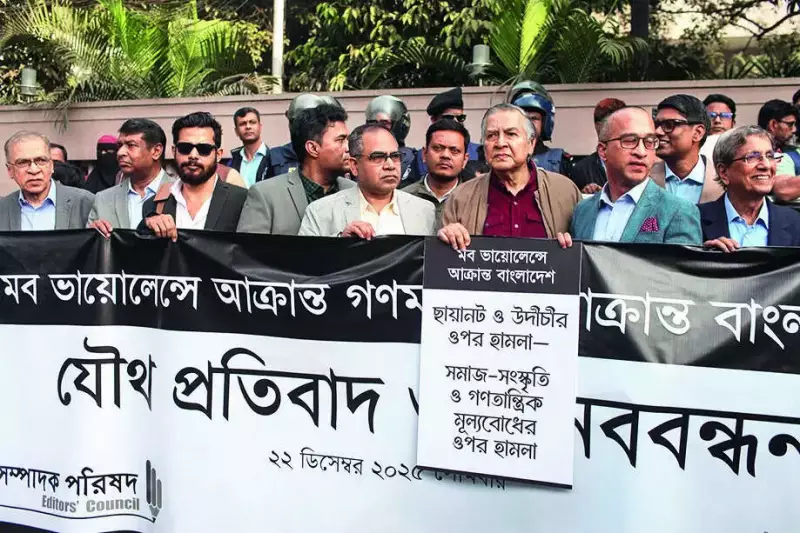
Bangladesh's tense political landscape has been rocked by a second targeted attack on a prominent opposition figure within days. Motaleb Shikder, a leader of the NCP party, was shot and injured by unidentified assailants in Khulna on Saturday. This incident follows the fatal shooting of another key opposition leader, Sharif Osman Hadi, a figure known for his anti-India stance, just days earlier.
Details of the Khulna Attack
The attack on Motaleb Shikder occurred as political tensions run high ahead of the crucial February 12 parliamentary elections. Shikder is a leader of the NCP (Nationalist Congress Party), which is contesting the polls in an alliance with Bangladesh's largest Islamist party, Jamaat-e-Islami (JeI).
According to hospital officials, Motaleb sustained a gunshot wound to the left side of his head. Mohammad Akhtaruzzaman, the superintendent of Khulna Medical College Hospital, confirmed to reporters that the leader received primary treatment and is now out of danger. "Motaleb sustained a gunshot wound to the left side of his head. He is now out of danger and received primary treatment at the dressing room of the hospital's surgery ward," Akhtaruzzaman stated.

Escalating Violence and Security Response
The shooting of Shikder adds to a volatile situation ignited by the death of Sharif Osman Hadi, a prominent figure in the "July Uprising" that contributed to the collapse of the Sheikh Hasina government last year. Hadi, who led the radical Inquilab Mancho, died on Thursday, six days after being shot in the head by masked gunmen.
His death triggered large-scale mob violence in major cities like Dhaka, highlighting the deep-seated unrest. In response to the escalating threats, the interim government has taken swift security measures.
On Monday, Home Affairs Adviser Jahangir Alam Chowdhury announced that armed security personnel have been assigned to 20 individuals identified as being on "hit lists" and facing security threats. "Those who are on hit lists or concerned about their security have already been provided with gunmen," Chowdhury told reporters. He added that while some individuals declined security for personal reasons, intelligence agencies are ensuring protective measures based on risk levels.
Government's Proactive Measures and Monitoring
The government is taking a multi-pronged approach to prevent further violence. Adviser Chowdhury emphasized that intelligence agencies are maintaining constant vigilance. "The intelligence agencies are continuously monitoring the situation to maintain law and order and prevent any possible attacks," he said.
The security coverage is also flexible and can be expanded if needed. The adviser confirmed that more individuals could be brought under security coverage if necessary, indicating a dynamic assessment of the threat landscape as the election date approaches.
These back-to-back attacks on opposition leaders have cast a long shadow over the upcoming parliamentary polls, raising serious concerns about the safety of political activists and the potential for further unrest in the lead-up to the February 12 vote.






