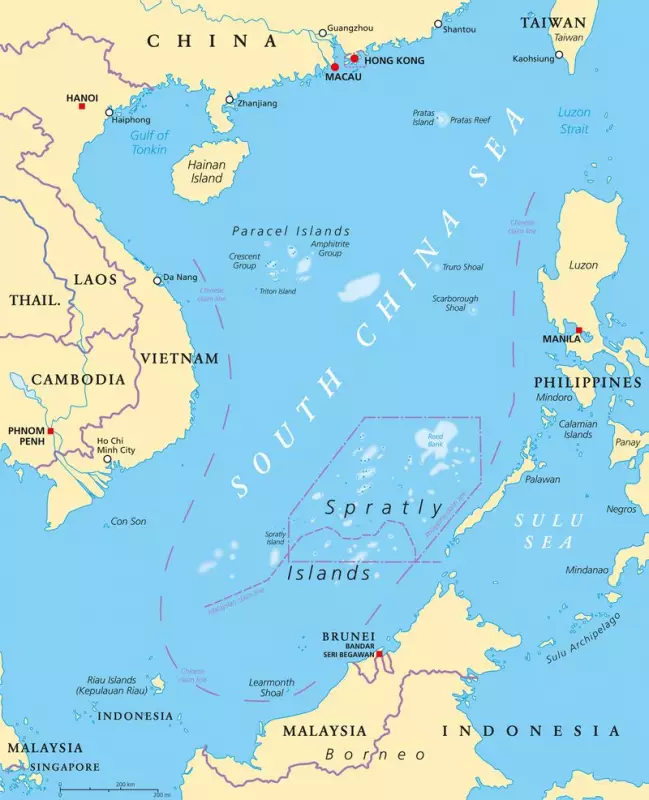
The tranquil waters of the South China Sea conceal a simmering geopolitical fault line. At its heart lies the Scarborough Shoal, a small but strategically vital atoll that has become a persistent flashpoint between two Asian nations. This dispute underscores the broader tensions over sovereignty and maritime rights in one of the world's most crucial waterways.
What and Where is the Scarborough Shoal?
Known as Bajo de Masinloc or Panatag Shoal in the Philippines and Huangyan Island in China, the Scarborough Shoal is a triangular-shaped coral atoll. Its location is precisely what fuels the controversy. It sits approximately 200 kilometres off the coast of Luzon in the Philippines. Crucially, this places it well within the 200-nautical-mile Exclusive Economic Zone (EEZ) of the Philippines, as defined by the United Nations Convention on the Law of the Sea (UNCLOS).
Despite this, China maintains a historical claim over the shoal and a vast portion of the South China Sea. The competing claims transform this remote feature into a symbol of a much larger struggle for control over resources, fishing grounds, and strategic maritime channels.
The Core of the Conflict: UNCLOS vs. Historical Claims
The legal battleground for this dispute is clear-cut from the Philippine perspective. The UN Convention on the Law of the Sea (UNCLOS), to which both nations are signatories, grants coastal states sovereign rights to explore, exploit, and manage resources within their EEZ. By this measure, the Scarborough Shoal falls under Manila's jurisdiction.
China, however, bases its claim on historical records and a so-called "nine-dash line" map that encompasses most of the South China Sea. Beijing often deploys its coast guard and maritime militia vessels to assert control, leading to frequent standoffs with Philippine fishing boats and government vessels. This creates a volatile environment where a minor incident could quickly escalate.
Why This Small Shoal is a Major Flashpoint
The significance of Scarborough Shoal extends far beyond its physical size. Control over it influences several critical areas:
- Geopolitical Dominance: It is a key marker in the contest for influence in the South China Sea, watched closely by other regional powers and the United States.
- Resource Access: The surrounding waters are rich fishing grounds, vital for the livelihoods of Filipino fishermen.
- Strategic Positioning: It offers a vantage point for monitoring maritime traffic and projecting power in a crucial global trade route.
The ongoing tension, with China's persistent presence challenging the Philippines' EEZ rights, makes it a persistent test case for international maritime law and regional stability. The situation remains a delicate balancing act, with diplomatic protests, legal challenges, and occasional confrontations defining the current state of affairs.
For India, which champions freedom of navigation and a rules-based international order, the developments at Scarborough Shoal are a critical indicator of the regional power dynamics in the Indo-Pacific. The resolution of this dispute will set a precedent for how similar maritime claims are handled globally.