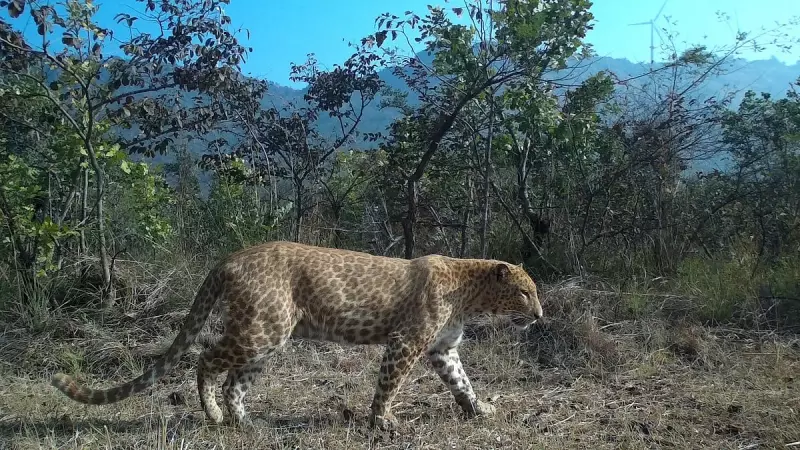
In a remarkable discovery for Indian wildlife, researchers have successfully documented an exceptionally rare pale-colored leopard, known as a 'Sandalwood' leopard, in the forests of Karnataka. This sighting marks only the second known instance of such a unique big cat in the country.
A One-in-a-Million Find
The discovery was made by researcher Chiranjeevi Kulkarni, who captured images of the elusive feline. The leopard's coat lacks the typical dark rosettes and exhibits a distinct, pale sandy or cream coloration, which gives it the 'Sandalwood' name. This rare genetic variation, known as leucism, results in reduced pigmentation.
The documentation was officially reported on 02 January 2026. This date solidifies the finding as a significant recent event in Indian conservation circles. The animal's presence highlights the rich and sometimes surprising biodiversity harbored within Karnataka's ecosystems.
A Mother with a Normally Marked Cub
Adding an extraordinary layer to the discovery, later photographic evidence revealed the female Sandalwood leopard was not alone. She was photographed alongside a cub that displayed a normal leopard coat coloration with classic black rosettes.
This observation is crucial for scientists. It indicates that the rare pale coloration is a recessive genetic trait. The normal appearance of the cub suggests the unique gene was not passed on in this generation or was overridden by the genes from the other parent. This mother-cub pair offers a living case study in wildlife genetics.
Significance for Conservation
The spotting of this rare leopard has profound implications. First, it underscores the critical importance of preserving large, contiguous forest habitats. Such rare genetic lines can only survive where ecosystems are healthy and undisturbed, allowing animals to roam and breed naturally.
Second, it provides invaluable data for researchers studying genetic diversity and mutations within large carnivore populations. Monitoring this individual and her offspring could yield insights into how such traits persist in the wild. The find also boosts eco-tourism and local conservation pride, demonstrating that Karnataka's wilderness still holds unique secrets waiting to be found.
Ultimately, the Sandalwood leopard of Karnataka is more than a curiosity; it is a symbol of nature's endless capacity for variation and a powerful reminder of what we stand to lose without vigilant conservation efforts.