For decades, Pakistan has used the Kashmir issue to criticise India, but the reality in Pakistan-occupied Kashmir (PoK) tells a starkly different story. While Jammu and Kashmir has seen visible development under India's democratic framework, PoK remains mired in recurring unrest and allegations of rights abuses.
Deadly Violence in PoK
The latest wave of violence in PoK has reportedly left at least 20 people dead, including security personnel. The unrest has once again embarrassed the leadership of Prime Minister Shehbaz Sharif and Army Chief Asim Munir, exposing deep tensions in the region. The Pakistani government has responded by imposing a terror tag on a prominent civil society body, accusing it of inciting violence.
Root Causes of Unrest
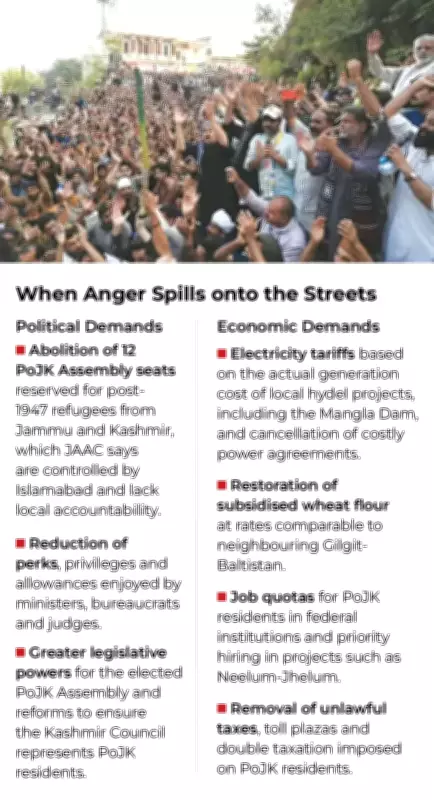
Analysts point to a combination of factors fueling the instability: economic deprivation, political suppression, and a lack of basic rights. The people of PoK have long complained about being treated as second-class citizens, with limited autonomy and exploitation by the federal government. The recent crackdown on civil society has only exacerbated grievances.

Pakistan's Governance Failures
The unrest highlights Pakistan's inability to manage its own territory while continuing to stoke tensions in Indian-administered Kashmir. The terror tag on a civil society organisation is seen as a desperate move to silence dissent rather than address legitimate concerns. The Sharif-Munir leadership faces mounting pressure as the crisis deepens, with no clear strategy for resolution.
International Implications
The situation in PoK has drawn international attention, with human rights groups condemning the use of excessive force. The unrest also complicates Pakistan's diplomatic efforts, as it struggles to maintain credibility on the Kashmir issue. Meanwhile, India has reiterated its stance that PoK is an integral part of India and called for an end to human rights violations.
As the death toll rises and tensions escalate, the PoK unrest serves as a stark reminder of Pakistan's internal challenges and the growing disconnect between its rhetoric and reality.