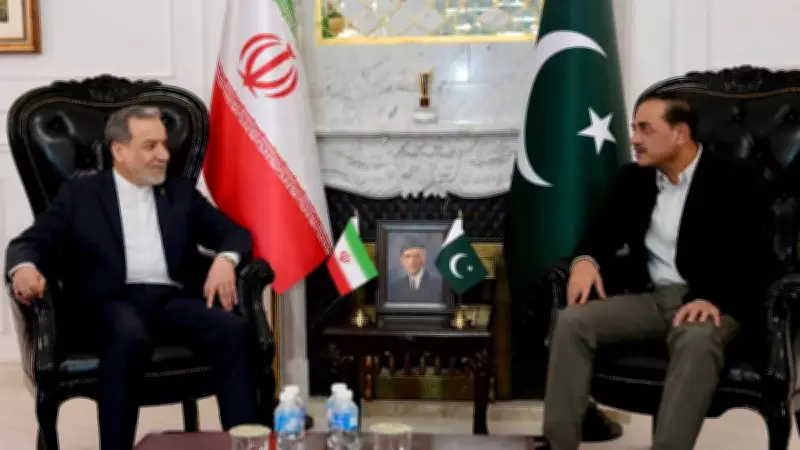
Pakistan's army chief General Asim Munir has flown to Tehran for a high-level visit as negotiations between the United States and Iran approach a potential breakthrough. The trip underscores the complex diplomatic dynamics in the region, with Pakistan positioning itself as a key interlocutor.
Strategic Visit Amid Diplomatic Shifts
General Munir's visit comes at a critical juncture when US-Iran talks, mediated by regional and international actors, are showing signs of progress. The discussions in Tehran are expected to cover bilateral security cooperation, regional stability, and the evolving situation in Afghanistan.
Pakistan's Role in Regional Diplomacy
Pakistan has historically maintained close ties with both Iran and the United States, making it a potential bridge between the two adversaries. The army chief's visit is seen as an effort to align Pakistan's strategic interests with the changing geopolitical landscape. Analysts suggest that Islamabad aims to ensure that any US-Iran agreement does not undermine its own security concerns, particularly regarding cross-border militancy and trade routes.

The visit also comes amid reports of increased Chinese involvement in the region, with Beijing pushing for stability to protect its Belt and Road Initiative investments. Pakistan, as a close ally of China, is likely coordinating its approach with both Tehran and Beijing.
US-Iran Talks: Key Developments
The United States and Iran have been engaged in indirect negotiations, with Oman and Qatar serving as key mediators. Sources indicate that a framework for a new nuclear deal and sanctions relief is taking shape, though significant hurdles remain. Iran has demanded guarantees that the US will not withdraw from any agreement, while Washington seeks verifiable limits on Iran's nuclear program.
General Munir's discussions with Iranian military and political leaders are expected to touch upon these issues, as well as the security of the Gulf region and the situation in Yemen.
Implications for South Asia
The outcome of US-Iran talks could have far-reaching implications for South Asia. A potential deal might reduce tensions in the Persian Gulf, affecting energy prices and trade routes critical for Pakistan's economy. Conversely, a breakdown could lead to renewed instability, prompting Pakistan to bolster its defenses along the Iran border.
Pakistan's military leadership is also wary of the impact on the Kashmir issue, as Iran has traditionally supported Pakistan's stance. Any shift in Iran's foreign policy under a new agreement could alter the dynamics of regional alliances.
General Munir's visit to Tehran is expected to last two days, with a series of meetings scheduled with Iran's Supreme National Security Council and senior military commanders. The trip highlights Pakistan's proactive diplomatic engagement as it navigates a rapidly changing regional order.